Will Electric Cars Change the Future of the Automobile Industry? Best Guide (2026)
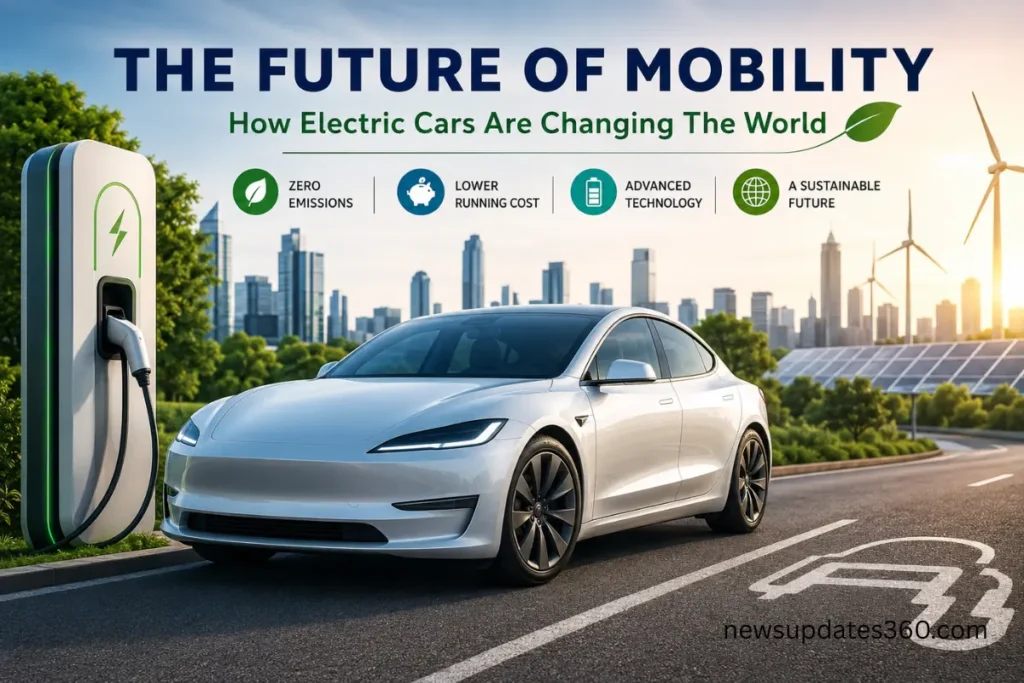
Discover how Electric Cars are transforming the automobile industry with advanced technology, lower running costs, sustainability, and future innovations. Read the complete 2026 guide.
Introduction
The global automobile industry is experiencing one of the biggest transformations in its history. For more than a century, petrol and diesel vehicles dominated roads around the world, shaping transportation, infrastructure, and even economic growth. Today, however, technological innovation, environmental concerns, and changing consumer preferences are creating a new chapter that is impossible to ignore.
Electric Cars are no longer considered a futuristic concept or a niche product for technology enthusiasts. They have become a practical choice for families, businesses, and governments looking for cleaner, smarter, and more cost-effective transportation. Improvements in battery technology, longer driving ranges, faster charging systems, and expanding charging networks have made electric vehicles more accessible than ever before.
Major automotive manufacturers are investing billions of dollars into research, development, and production of electric vehicles. At the same time, governments across the world are introducing policies that encourage the adoption of cleaner transportation by offering incentives, tax benefits, and infrastructure support. These developments indicate that the automotive industry is entering a period of significant transformation.
This article explores how Electric Cars are changing the automobile market, the opportunities they create, the challenges they still face, and whether they truly represent the future of transportation.
The Evolution of the Automobile Industry
The automobile industry has never remained static. Every major technological breakthrough has reshaped the way people travel and how manufacturers design vehicles.
The journey began with steam-powered vehicles, followed by gasoline-powered engines that revolutionized transportation during the twentieth century. Diesel engines later became popular because of their fuel efficiency and durability, particularly in commercial transportation.
As urban populations increased and concerns about air pollution became more serious, governments and researchers started exploring cleaner alternatives. Hybrid vehicles offered the first major step toward reducing fuel consumption by combining electric motors with conventional engines.
Eventually, advances in lithium-ion battery technology, electric motors, and power electronics made fully electric vehicles commercially viable. This shift marked the beginning of a new era where innovation focuses not only on performance but also on sustainability, energy efficiency, and digital connectivity.
The automotive industry today is evolving faster than ever before, with software, artificial intelligence, and renewable energy becoming just as important as mechanical engineering.
Why the Demand for Electric Vehicles Is Growing Rapidly
Several factors are contributing to the rapid growth of the electric vehicle market worldwide.
Consumers are becoming increasingly aware of environmental issues and are looking for transportation options that produce fewer emissions. Rising fuel prices have also encouraged many buyers to consider alternatives that reduce daily operating costs.
Manufacturers are introducing vehicles with improved performance, attractive designs, and advanced technology features that appeal to a wider audience. Features such as connected infotainment systems, over-the-air software updates, intelligent driver assistance, and smartphone integration make modern electric vehicles highly competitive.
Charging infrastructure has expanded significantly in many countries, making long-distance travel more practical than it was just a few years ago. Public charging stations, workplace charging facilities, and home charging solutions continue to improve convenience for EV owners.
The combination of environmental awareness, technological advancement, and economic benefits has accelerated the global transition toward Electric Cars, making them one of the fastest-growing segments of the automotive industry.
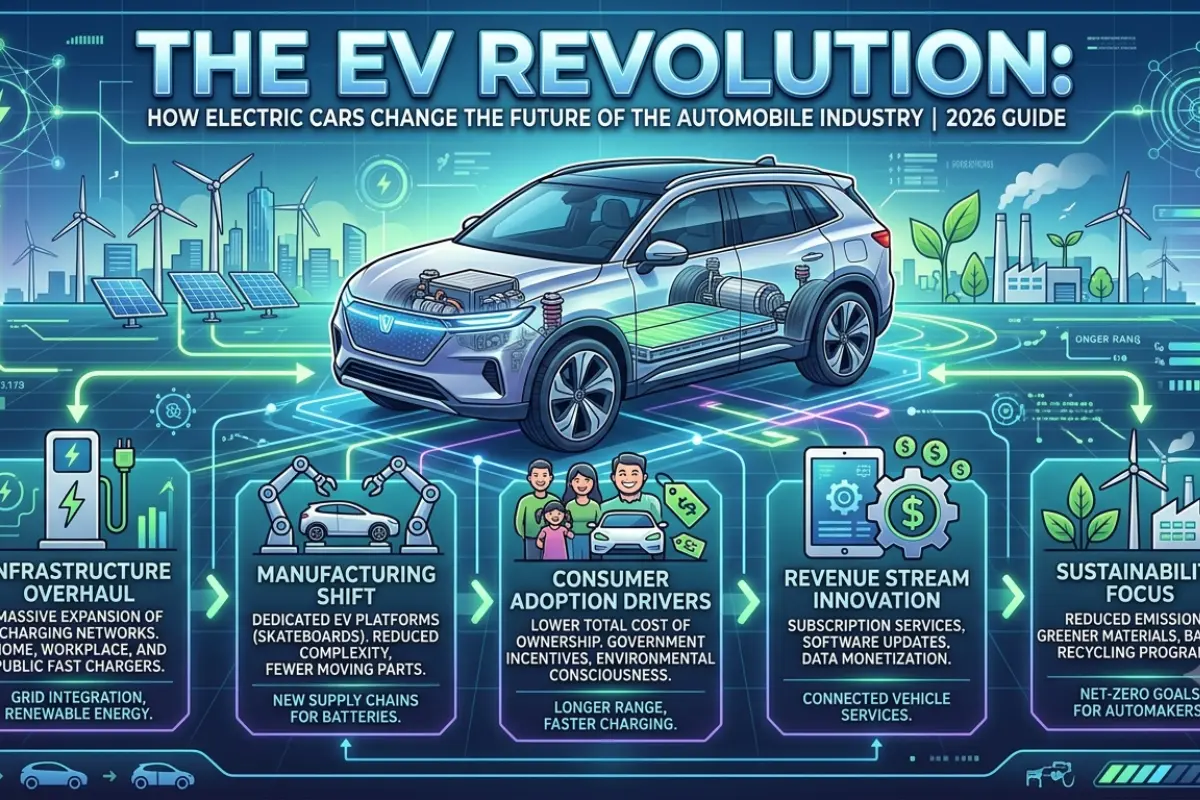
How Electric Cars Work
Understanding the technology behind electric vehicles helps explain why they differ so significantly from conventional automobiles.
Unlike petrol or diesel vehicles that rely on internal combustion engines, electric vehicles use electric motors powered by rechargeable battery packs. Energy stored in the battery is converted into mechanical motion through an electric drivetrain.
The basic components include:
- High-capacity battery pack
- Electric motor
- Power inverter
- Charging system
- Battery Management System (BMS)
- Regenerative braking system
- Electronic control units
When the accelerator pedal is pressed, electricity flows from the battery to the motor, producing immediate torque that results in smooth and responsive acceleration.
One of the most impressive technologies used in modern EVs is regenerative braking. Instead of wasting energy as heat during braking, the motor works in reverse, converting kinetic energy into electrical energy and storing it back in the battery. This improves efficiency and extends driving range.
Because there are fewer moving mechanical parts compared to traditional engines, maintenance requirements are generally lower, making ownership simpler and more economical over time.
Advantages That Make Electric Cars a Game Changer
Every major technological revolution succeeds because it offers meaningful advantages over previous solutions. Electric vehicles are transforming transportation by delivering improvements in efficiency, performance, and ownership experience.
Lower operating costs are among the biggest reasons people choose Electric Cars. Electricity typically costs less than petrol or diesel for the same travel distance, allowing owners to save money over the life of the vehicle.
Maintenance costs are also lower because electric motors require fewer routine services. There are no engine oil changes, fewer fluids to replace, and fewer mechanical components that wear out over time.
Instant torque provides quick acceleration, creating a smooth and enjoyable driving experience in both city traffic and highway conditions.
Another important advantage is quiet operation. Electric motors produce significantly less noise than combustion engines, improving passenger comfort while also reducing noise pollution in urban areas.
Modern EVs also integrate advanced software features that enhance convenience and safety. Remote vehicle monitoring, smartphone-based controls, intelligent navigation, predictive maintenance alerts, and over-the-air updates allow vehicles to improve even after purchase.
These benefits demonstrate why many industry experts believe electric mobility represents much more than a temporary trend.
Environmental Benefits of Electric Vehicles
Climate change has become one of the defining global challenges of the twenty-first century. Transportation contributes a significant share of greenhouse gas emissions, making cleaner mobility solutions increasingly important.
Battery-powered vehicles produce zero tailpipe emissions during operation. This helps reduce urban air pollution, particularly in densely populated cities where vehicle emissions directly affect public health.
The environmental impact of electric vehicles becomes even more positive when electricity is generated from renewable energy sources such as solar, wind, or hydroelectric power. As clean energy production increases worldwide, the overall carbon footprint of electric transportation continues to decline.
In addition to reducing greenhouse gas emissions, electric vehicles contribute to lower noise pollution because electric motors operate quietly. This creates healthier and more comfortable urban environments for residents.
Manufacturers are also investing in battery recycling, sustainable materials, and environmentally responsible production methods to further improve the lifecycle sustainability of electric vehicles.
Although battery production still presents environmental challenges, continuous research is improving manufacturing efficiency, recycling technologies, and the use of alternative materials, making the industry more sustainable every year.
Are Electric Cars Really Changing the Market?
The automotive industry is witnessing one of its fastest periods of transformation. Consumer preferences, government policies, technological innovation, and manufacturer investment are all moving in the same direction.
Automakers that once focused almost entirely on combustion engines are now launching dedicated electric platforms designed specifically for battery-powered vehicles. New manufacturing facilities, battery gigafactories, and software development centers are being established around the world to support this transition.
Consumers are also changing their expectations. Buyers increasingly value digital features, intelligent safety systems, lower ownership costs, and environmentally responsible transportation. These changing priorities are influencing vehicle design, research investments, and long-term business strategies.
The evidence suggests that Electric Cars are no longer simply another vehicle category they are reshaping how the entire automobile industry thinks about design, manufacturing, technology, and customer experience.
Electric Cars vs Petrol Cars vs Diesel Cars
Choosing the right vehicle today is no longer just about looks or engine power. Buyers now consider running costs, maintenance expenses, environmental impact, resale value, and long-term reliability before making a purchase. The competition between traditional fuel-powered vehicles and electric vehicles has become one of the biggest discussions in the automotive world.
Understanding the differences between these vehicle types helps consumers make informed decisions based on their lifestyle, budget, and driving habits.
| Feature | Electric Cars | Petrol Cars | Diesel Cars |
|---|---|---|---|
| Fuel Cost | Very Low | High | Moderate |
| Maintenance | Low | Medium | High |
| Engine Noise | Almost Silent | Moderate | High |
| Tailpipe Emissions | Zero | High | High |
| Instant Torque | Excellent | Average | Good |
| Oil Change Required | No | Yes | Yes |
| Charging/Fueling | Charging Station | Petrol Pump | Diesel Pump |
| Environmental Impact | Low | High | High |
| Future Growth | Very High | Moderate | Declining |
One of the biggest advantages of Electric Cars is their significantly lower operating cost. Electricity generally costs much less than petrol or diesel, allowing drivers to save a considerable amount over several years of ownership.
Petrol vehicles remain convenient because fuel stations are widely available, while diesel vehicles continue to be preferred for heavy commercial applications. However, as charging infrastructure expands and battery technology improves, the advantages of electric mobility continue to grow stronger.
Battery Technology – The Heart of Every Electric Vehicle
The battery is the most important component of an electric vehicle. It determines how far a vehicle can travel, how quickly it accelerates, how long it lasts, and how much it costs.
Modern EVs primarily use Lithium-Ion batteries because they offer an excellent balance of energy density, durability, charging speed, and weight. Manufacturers continuously invest in battery research to improve efficiency while reducing production costs.
Several important battery technologies are shaping the future of electric transportation:
Lithium-Ion Batteries
Lithium-Ion batteries dominate today’s market because they provide:
- High energy storage capacity
- Fast charging capability
- Long operational life
- Low maintenance
- Reliable performance
These batteries have become the industry standard due to years of research and continuous improvement.
Solid-State Batteries
Many experts believe solid-state batteries represent the next major breakthrough in EV technology.
Their expected advantages include:
- Longer driving range
- Faster charging
- Higher safety
- Reduced fire risk
- Longer battery lifespan
- Higher energy density
Although large-scale production is still developing, solid-state batteries could dramatically improve future electric vehicles.
Battery Management System (BMS)
Every modern EV contains an intelligent Battery Management System that constantly monitors:
- Battery temperature
- Voltage
- Current
- Charging status
- Cell balancing
- Battery health
The BMS protects the battery from overheating, overcharging, and deep discharge, ensuring safe and efficient operation throughout its lifetime.
Charging Infrastructure Is Improving Every Year
One of the biggest concerns for potential EV buyers has always been charging availability. Fortunately, this situation is improving rapidly across many countries as governments and private companies invest heavily in charging infrastructure.
Today’s charging options are much more flexible than they were just a few years ago.
Home Charging
Home charging remains the most convenient option for daily users.
Benefits include:
- Charge overnight
- Lower electricity cost
- Convenient daily routine
- No waiting in fuel station queues
For most commuters, overnight charging easily provides enough range for everyday travel.
Public Charging Stations
Public charging stations are expanding in:
- Shopping malls
- Office buildings
- Hotels
- Restaurants
- Parking complexes
- Highways
- Airports
This growing network makes long-distance travel increasingly practical.
Fast Charging
Modern DC fast chargers can recharge a large portion of the battery within a relatively short time, making road trips much easier than before.
Continuous investment in charging infrastructure is removing one of the biggest barriers to EV adoption.
Running Cost Analysis – How Much Can Owners Save?
When purchasing a vehicle, the initial price is only one part of the total ownership cost. Running expenses over several years often have a much greater financial impact.
This is where Electric Cars provide one of their strongest advantages.
Fuel Savings
Electricity generally costs much less than petrol or diesel for the same travel distance.
Drivers covering thousands of kilometers each year can potentially save a substantial amount on fuel expenses.
Maintenance Savings
Electric vehicles have fewer moving mechanical parts.
This means owners typically avoid many common maintenance expenses such as:
- Engine oil changes
- Spark plug replacement
- Clutch replacement
- Timing belt maintenance
- Exhaust system repairs
Lower maintenance contributes significantly to the total cost savings during ownership.
Brake System Savings
Regenerative braking reduces wear on traditional brake components.
As a result:
- Brake pads last longer
- Brake discs wear more slowly
- Maintenance intervals become longer
These savings may appear small individually but become significant over several years.
Smart Technology Is Redefining Modern Vehicles
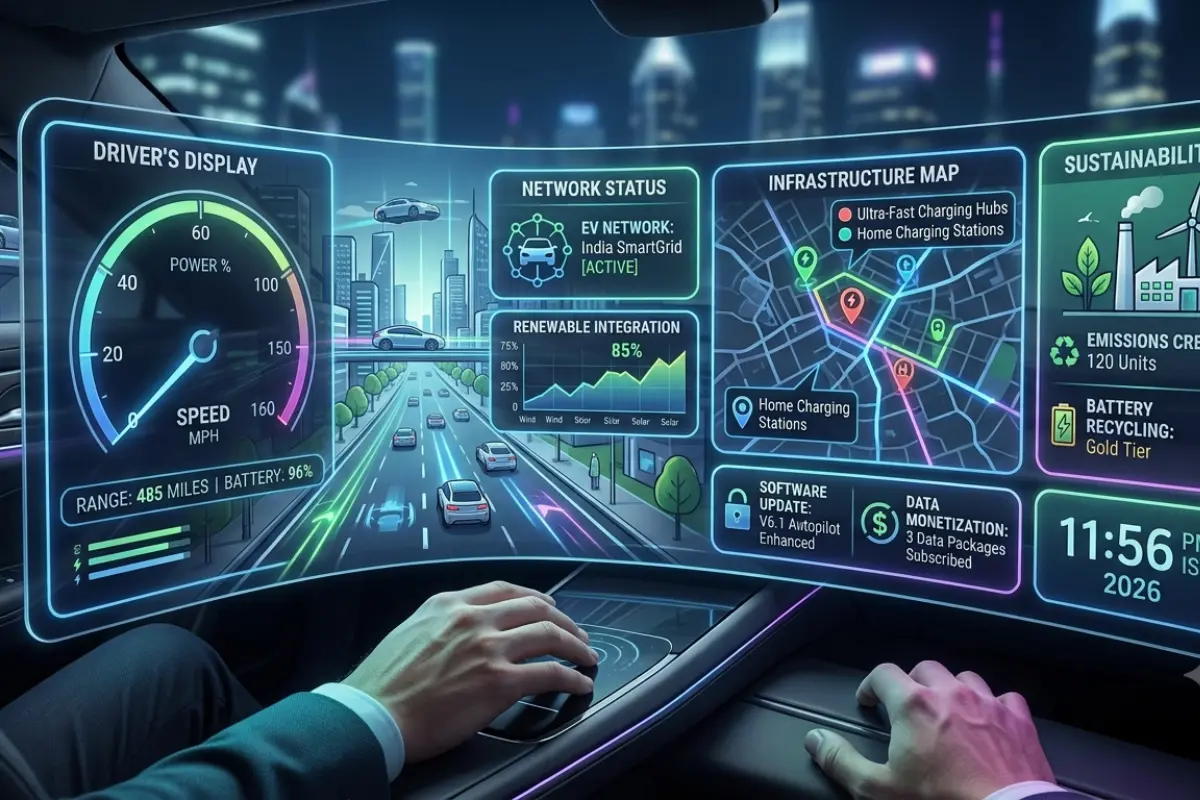
The modern automobile is becoming more like a computer on wheels than a traditional mechanical machine.
Electric vehicles are leading this transformation by integrating advanced software with intelligent hardware systems.
Some common smart technologies include:
- Large touchscreen displays
- Voice assistants
- Smartphone connectivity
- Navigation with live traffic
- Remote vehicle control
- Digital key access
- Wireless software updates
- AI-powered energy management
Many manufacturers now improve vehicle functionality through software updates even after customers purchase the vehicle.
This approach keeps vehicles modern without requiring major hardware replacements.
Advanced Safety Features
Safety remains one of the highest priorities for vehicle manufacturers.
Modern electric vehicles include numerous intelligent safety systems that actively help prevent accidents rather than simply protecting passengers during a collision.
Common safety technologies include:
Advanced Driver Assistance Systems (ADAS)
ADAS combines cameras, radar sensors, and artificial intelligence to monitor the driving environment.
Features often include:
- Adaptive Cruise Control
- Lane Keeping Assist
- Automatic Emergency Braking
- Blind Spot Detection
- Traffic Sign Recognition
- Driver Attention Monitoring
These technologies reduce driver workload while improving overall road safety.
Strong Vehicle Structure
Battery packs are typically mounted beneath the vehicle floor.
This design offers several advantages:
- Lower center of gravity
- Improved stability
- Better cornering
- Reduced rollover risk
- Strong passenger protection
Engineers carefully reinforce battery compartments to provide excellent crash protection.
Artificial Intelligence Is Transforming the Driving Experience
Artificial Intelligence has become an essential component of modern mobility.
AI continuously analyzes thousands of data points while driving to improve efficiency, comfort, and safety.
Applications include:
- Route optimization
- Battery range prediction
- Traffic analysis
- Predictive maintenance
- Driver behaviour analysis
- Energy optimization
- Voice recognition
These intelligent systems help drivers maximize vehicle performance while reducing energy consumption.
As AI technology advances, future vehicles will become even smarter and more autonomous.
Autonomous Driving – The Next Revolution
The future of transportation extends beyond electrification.
Autonomous driving technology aims to allow vehicles to operate with minimal or even no human intervention under certain conditions.
Modern vehicles already include partial automation such as:
- Automatic parking
- Highway lane centering
- Traffic jam assistance
- Adaptive cruise control
- Collision avoidance systems
Fully autonomous driving still faces technical, legal, and regulatory challenges, but rapid progress continues worldwide.
Electric vehicle platforms are particularly well suited for autonomous technologies because of their advanced electronic architecture and software integration.
Challenges That Still Need to Be Solved
Despite remarkable progress, several challenges remain before electric mobility achieves complete mainstream adoption.
Battery production remains expensive, contributing to higher purchase prices compared to some conventional vehicles.
Charging infrastructure continues expanding, but rural areas in many countries still require additional investment.
Battery recycling technologies must continue improving to maximize environmental sustainability.
Consumers also need greater awareness regarding battery lifespan, charging habits, and long-term ownership benefits.
Manufacturers, governments, energy companies, and technology firms are working together to overcome these challenges through innovation, investment, and supportive policies.
While obstacles remain, industry trends suggest that these issues are gradually becoming easier to address as technology matures.
The Future of Electric Vehicle Technology
The automotive industry is entering an exciting era where innovation is advancing at an unprecedented pace. Every year, manufacturers introduce new technologies that make electric vehicles more efficient, safer, and more convenient. The future of mobility is expected to combine electrification, artificial intelligence, renewable energy, and smart infrastructure into a seamless transportation ecosystem.
One of the most anticipated developments is the commercialization of solid-state batteries. These batteries promise higher energy density, shorter charging times, improved safety, and longer service life than current lithium-ion batteries. If mass production becomes economically viable, they could dramatically increase driving range while reducing charging time.
Wireless charging technology is another area attracting significant investment. Instead of plugging in a charging cable, future vehicles may recharge simply by parking over specially designed charging pads. Researchers are even exploring dynamic wireless charging, where vehicles can receive power while driving on specially equipped roads.
Artificial intelligence will continue to improve route planning, battery management, traffic prediction, and vehicle maintenance. Advanced software will help drivers maximize efficiency while reducing energy consumption. Over-the-air software updates will introduce new features and improve vehicle performance throughout its lifetime without requiring a visit to a service center.
Vehicle-to-Grid (V2G) technology is another promising innovation. In the future, electric vehicles may not only consume electricity but also supply stored energy back to the power grid during periods of high demand. This could help stabilize electricity networks while providing additional value to vehicle owners.
Government Policies and Global Adoption
Governments around the world recognize that cleaner transportation is essential for reducing greenhouse gas emissions and improving urban air quality. As a result, many countries have introduced policies that encourage the transition to electric mobility.
Financial incentives such as purchase subsidies, tax reductions, lower registration fees, and rebates make electric vehicles more affordable for consumers. Some cities also provide additional benefits including free parking, access to special traffic lanes, and reduced toll charges.
Investment in charging infrastructure has become another major priority. Public charging stations are expanding along highways, in residential areas, shopping centers, office complexes, and public parking facilities. This growing network helps reduce range anxiety and increases confidence among potential buyers.
Many governments have also announced long-term plans to gradually reduce or phase out the sale of new petrol and diesel vehicles over the coming decades. These policies encourage manufacturers to accelerate investment in electric platforms, battery production, and renewable energy integration.
The pace of adoption varies between countries depending on infrastructure, economic conditions, electricity availability, and government support. However, the overall global trend clearly indicates continued growth in electric vehicle adoption.
Economic Impact on the Automotive Industry
The shift toward electric mobility is reshaping not only vehicle manufacturing but also the broader economy. Traditional automotive companies are investing billions of dollars in new production facilities, battery factories, software development centers, and research laboratories.
This transformation is creating demand for professionals in battery engineering, electronics, artificial intelligence, software development, cybersecurity, renewable energy, and charging infrastructure. Universities and technical institutions are also adapting their programs to prepare students for these emerging career opportunities.
Suppliers are evolving alongside manufacturers. Companies that once specialized in engine components are diversifying into electric drivetrains, power electronics, battery systems, and lightweight materials. At the same time, startups are entering the market with innovative technologies that challenge established industry leaders.
While some traditional automotive jobs may change as internal combustion engine production declines, entirely new industries and employment opportunities are emerging around electric mobility, energy storage, and digital transportation services.
Common Myths About Electric Vehicles
Whenever a new technology becomes popular, misconceptions often spread alongside accurate information. Understanding the facts helps consumers make informed decisions.
Myth 1: Electric vehicles cannot travel long distances.
Modern models offer ranges that comfortably meet the daily driving needs of most people. Many newer vehicles can travel several hundred kilometers on a single charge, making long-distance travel increasingly practical.
Myth 2: Batteries need frequent replacement.
Battery technology has improved significantly over the past decade. Most manufacturers provide long-term battery warranties, and real-world experience shows that batteries generally retain useful capacity for many years when properly maintained.
Myth 3: Charging always takes an entire day.
Charging time depends on the charging method. Home charging is ideal overnight, while modern DC fast chargers can replenish a significant portion of battery capacity in a relatively short period.
Myth 4: Electric vehicles are not powerful.
Electric motors deliver instant torque, allowing many electric vehicles to accelerate quickly and smoothly. Several high-performance electric models outperform traditional sports cars in acceleration tests.
Myth 5: Electric vehicles are only for city driving.
With expanding charging infrastructure and increasing driving ranges, electric vehicles are becoming suitable for both urban commuting and long-distance travel.
Buying Guide for First-Time EV Owners
Purchasing your first electric vehicle requires careful planning. Instead of focusing only on the purchase price, buyers should evaluate the complete ownership experience.
Consider your average daily driving distance. If your regular commute is relatively short, many affordable electric vehicles can easily meet your needs without frequent public charging.
Evaluate charging options at home, work, or nearby public locations. Convenient charging access can significantly improve the ownership experience.
Compare battery warranty coverage, charging speed, service network availability, software features, and safety technologies before making a final decision.
Also consider future resale value, manufacturer reputation, total maintenance costs, and the availability of customer support in your region.
Taking time to research these factors will help ensure that the chosen vehicle matches your lifestyle and long-term expectations.
Frequently Asked Questions (FAQs)
Are electric vehicles suitable for daily commuting?
Yes. Most daily commuters travel well within the driving range offered by modern electric vehicles, making them an excellent option for regular use.
How long do EV batteries usually last?
Battery life depends on driving habits, climate, charging practices, and technology. Modern batteries are designed to provide reliable performance for many years and are typically supported by long manufacturer warranties.
Is maintenance cheaper than conventional vehicles?
In many cases, yes. Electric vehicles have fewer moving parts and generally require less routine maintenance because they do not need engine oil changes, spark plug replacement, or many of the services associated with internal combustion engines.
Are electric vehicles environmentally friendly?
They produce zero tailpipe emissions during operation. Their overall environmental impact continues to improve as electricity generation increasingly relies on renewable energy and battery recycling technologies advance.
Will charging infrastructure continue to improve?
Yes. Governments, utility companies, and private businesses are investing heavily in expanding charging networks, making ownership more convenient every year.
Conclusion
The automobile industry is undergoing one of the most significant transformations in its history. Advances in battery technology, software integration, charging infrastructure, and renewable energy are reshaping how people think about transportation.
Although challenges such as charging availability, battery costs, and infrastructure development still exist in some regions, progress is accelerating rapidly. Manufacturers continue to introduce more capable vehicles, governments are expanding policy support, and consumers are increasingly recognizing the long-term benefits of cleaner mobility.
Rather than representing a temporary trend, electric mobility appears to be a long-term evolution of the automotive industry. Continued innovation will likely make future vehicles safer, smarter, more efficient, and more environmentally sustainable.
For consumers, businesses, and governments alike, understanding these changes today will help them prepare for the transportation systems of tomorrow.
Final Thoughts
The transition to electric mobility is not simply about replacing one type of engine with another. It represents a broader shift toward intelligent transportation, sustainable energy, digital connectivity, and cleaner cities. As technology continues to evolve, the decisions made today will shape the future of mobility for generations to come.
If you found this guide helpful, share it with friends, colleagues, or anyone interested in the future of the automobile industry. Staying informed is the first step toward making smarter transportation decisions.
For more info visit carwale.com
Related Updates
- Best Family Cars in India: आपके परिवार के लिए कौन-सी Car है Best Choice?-2026
- 2026 में कौन सी Hybrid and Electric SUV खरीदनी चाहिए? जानिए कीमत, लॉन्च डेट, फीचर्स और पूरी तुलना Better Info
- Kia Syros EV India Launch:2026 Will Kia Bring Its New Electric SUV Sooner to India? Best Information
- Best Electric Cars for Indian Roads in 2026 – Top 5 EV Cars for Indian Families
- Tata Tiago EV Launch in India ने बदल दिया भारतीय ऑटो सेक्टर Best Guide In 2026
- Honda Cars Plan 6 New Models in 2026-2027: Big SUV and EV Launches Set to Transform the Indian Market
- Mercedes-Benz 2026 Facelift: New Design, Advanced Technology and Luxury Redefined
- Nissan Gravite 7-Seater MPV Launch in Chennai: Affordable Family Car with Smart Features & Practical Comfort