How Vector Databases Power Modern AI Applications: The Backbone of Intelligent Systems in 2026
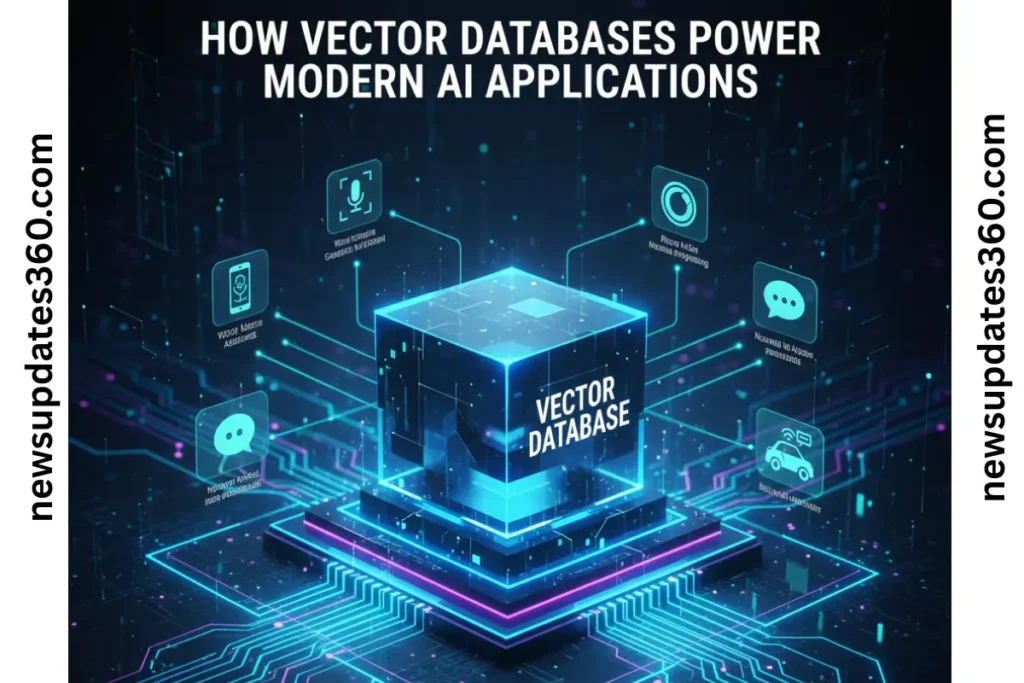
Discover how Vector Databases power modern AI applications like chatbots, recommendation engines, and semantic search by enabling fast, scalable similarity search on high-dimensional data.
Introduction
Artificial Intelligence has moved far beyond rule-based systems. Today’s AI applications understand language, recognize images, personalize recommendations, and retrieve information with near-human accuracy. At the core of these capabilities lies an often overlooked yet critical technology: Vector Databases.
Vector databases are redefining how AI systems store, search, and retrieve data. They enable machines to work with meaning rather than just keywords or exact matches. In this article, we’ll explore what vector databases are, how they work, and why they have become essential for modern AI applications.
What Is a Vector Database?
A vector database is a specialized data storage system designed to store and search vector embeddings numerical representations of data such as text, images, audio, or videos.
In AI systems:
-
Text is converted into vectors using NLP models
-
Images are converted into vectors using vision models
-
Audio and video are also transformed into high-dimensional vectors
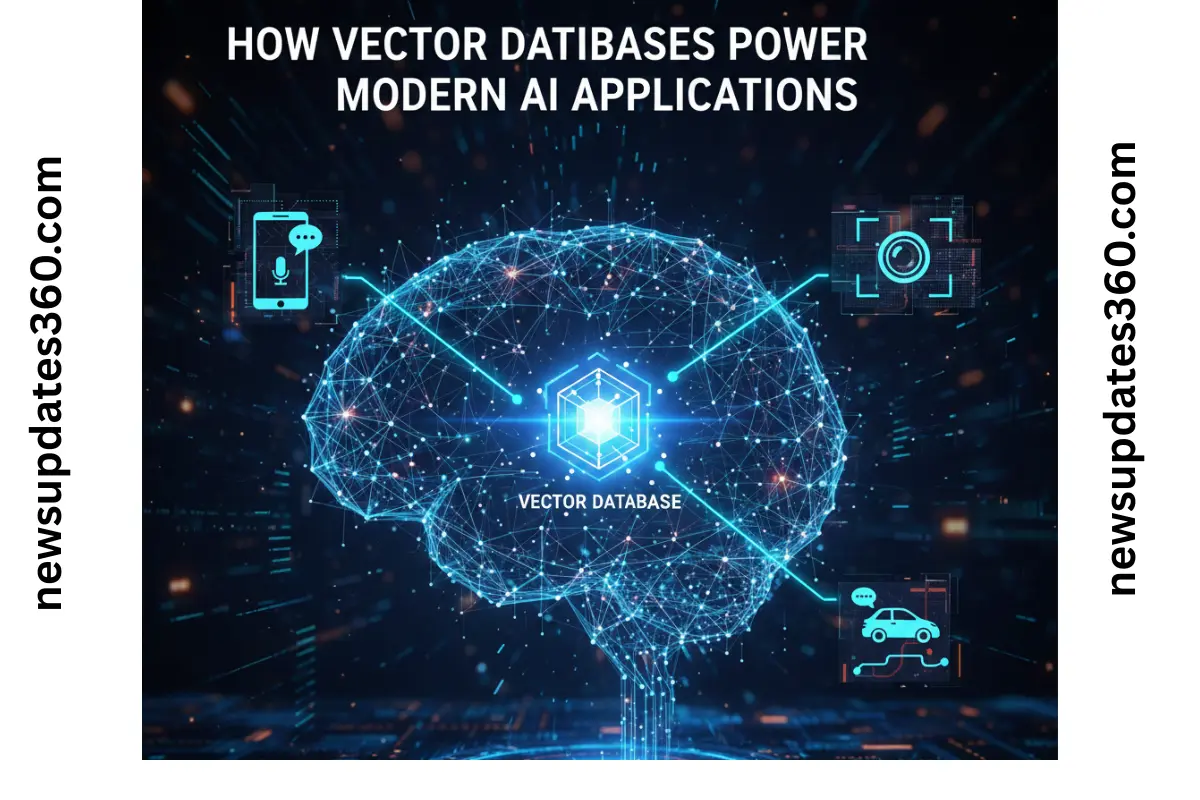
Each vector captures the semantic meaning of the data. A vector database efficiently stores these embeddings and enables rapid similarity searches based on distance metrics like cosine similarity or Euclidean distance.
Why Traditional Databases Are Not Enough
Traditional relational and NoSQL databases excel at exact matches and structured queries. However, they struggle with AI-driven use cases such as:
-
“Find documents similar to this paragraph”
-
“Recommend products based on user behaviour”
-
“Retrieve answers that mean the same, even if the words differ”
Vector databases solve this limitation by enabling approximate nearest neighbour (ANN) search, which finds semantically similar data points in milliseconds even across billions of vectors.
Top 10 Global Innovations future technologies 2030 that Will Change the World
How Vector Databases Work in AI Systems
1. Data Embedding
Raw data is converted into vectors using AI models like:
-
Language models for text
-
CNNs or vision transformers for images
-
Speech models for audio
2. Vector Storage
The generated vectors are stored along with metadata such as IDs, tags, or timestamps.
3. Indexing for Speed
Advanced indexing techniques like HNSW or IVF organize vectors in a way that enables extremely fast similarity searches.
4. Similarity Search
When a query is received, it is also converted into a vector. The database then finds the closest vectors based on mathematical distance, returning the most relevant results.

Key AI Applications Powered by Vector Databases
1. Semantic Search
Vector databases allow search engines to understand intent, not just keywords. Users get relevant results even if their phrasing is different from the stored content.
2. AI Chatbots and Virtual Assistants
Modern chatbots use vector databases to retrieve contextually relevant information, making conversations more accurate and coherent.
3. Recommendation Systems
Streaming platforms and e-commerce applications rely on vector similarity to recommend content or products based on user behaviour and preferences.
4. Retrieval-Augmented Generation (RAG)
Vector databases enhance large language models by retrieving relevant external knowledge before generating responses, reducing hallucinations and improving accuracy.
5. Image and Video Recognition
By comparing vector embeddings, AI systems can identify similar images, detect duplicates, or categorize visual content efficiently.

Benefits of Using Vector Databases in AI
-
High Performance: Millisecond-level search even with massive datasets
-
Scalability: Designed to handle millions or billions of vectors
-
Semantic Understanding: Focus on meaning rather than exact matches
-
Flexibility: Supports multiple data types text, images, audio, video
-
AI-Native Design: Built specifically for machine learning workloads
Top Cybersecurity Threats of 2025 and How to Stay Safe Online
Vector Databases and the Future of AI
As AI models continue to grow in size and capability, the demand for intelligent data retrieval will only increase. Vector databases are becoming a foundational layer in AI architecture, much like relational databases were for traditional applications.
From enterprise knowledge systems to autonomous agents and real-time personalization engines, vector databases will play a central role in shaping the next generation of intelligent software.
For more Info Visit https:- www.computer.org
Q&A
Q1. What is a vector database in simple terms?
A vector database is a specialized database that stores data as numerical vectors instead of traditional rows and columns. These vectors represent the meaning of data like text, images, or audio, allowing AI systems to search based on similarity rather than exact matches.
Q2. Why are vector database important for AI applications?
Vector database enable AI applications to understand context and meaning. They allow fast similarity searches, which are essential for tasks like semantic search, recommendations, chatbots, and intelligent content retrieval.
Q3. How do vector database differ from traditional databases?
Traditional database focus on structured data and exact queries, while vector databases handle unstructured data and similarity-based searches. Vector databases are optimized for high-dimensional data and AI workloads, which traditional databases are not designed for.
Q4. What are vector embeddings?
Vector embeddings are numerical representations of data generated by machine learning models. They capture semantic meaning, enabling AI systems to compare and relate different pieces of data mathematically.
Q5. How do vector database support semantic search?
In semantic search, both the query and stored content are converted into vectors. The vector database finds the closest matches based on similarity, allowing results that match intent even if the exact words are different.
Q6. What role do vector database play in AI chatbots?
Vector database help chatbots retrieve relevant information from large knowledge bases. This improves response accuracy, maintains conversation context, and enables advanced features like Retrieval-Augmented Generation (RAG).
Q7. Can vector database scale for large datasets?
Yes. Vector database are built to handle millions or even billions of vectors. They use optimized indexing algorithms to maintain high performance as data grows.
Q8. What industries commonly use vector databases?
Vector database are widely used in:
-
E-commerce (product recommendations)
-
Healthcare (medical data search)
-
Finance (fraud detection)
-
Media & entertainment (content recommendations)
-
Enterprise AI (knowledge management systems)
Q9. Are vector databases only used with large language models?
No. While they are popular with LLMs, vector databases are also used in image recognition, voice assistants, anomaly detection, personalization engines, and many other AI-driven systems.
Q10. How do vector databases improve AI accuracy?
By retrieving contextually relevant data before making decisions or generating responses, vector databases reduce errors, improve relevance, and minimize hallucinations in AI systems.
Q11. Is a vector database required for every AI application?
Not necessarily. Simple AI applications may not need one. However, for applications involving large-scale unstructured data, semantic understanding, or real-time recommendations, vector databases are highly beneficial.
Q12. What is the future of vector databases in AI?
Vector databases will become a core infrastructure component for AI systems. As AI applications demand deeper context understanding and faster retrieval, vector databases will play a critical role in powering intelligent, scalable solutions.
For More Info Visit www.quadranttechnologies.com
Game-Changing Multimodal Generative AI: Redefining Intelligent Workflows in 2025
Conclusion
Vector databases are not just another data storage option they are the backbone of modern AI applications. By enabling fast, scalable, and semantically meaningful search, they unlock the true potential of AI models.
If AI is the brain, vector databases are the memory system that allows it to think, learn, and respond intelligently.
Related Updates
- Top 5 AI Tools Every Developer Must Use in 2025 Best for Every Developer and Student
- Why Every Developer Should Master System Design (Even Before Becoming a Senior Engineer) In 2025-26
- AI Agents: The Next Big Tech Revolution of 2025-Everything You Need To Know
- Top 5 Smartphones Launching in 2026: The Next Generation of Ultra-Flagships
- Top 10 Upcoming Smartphones of 2025: Next-Gen Features That Will Redefine Mobile Technology


