Car Maintenance Cost in 2026: EV vs Petrol vs Hybrid – Complete 5-Years Ownership Breakdown

Confused between EV, petrol, and hybrid cars? This guide explains Car Maintenance Cost in 2026 with a full 5-year ownership breakdown, service intervals, and real-world expenses.
Introduction
Buying a car in 2026 is no longer just about showroom price, mileage claims, or fancy features. Rising fuel prices, expensive spare parts, and long-term ownership expenses have completely changed how smart buyers think. Today, understanding Car Maintenance Cost in 2026 is more important than negotiating a discount at the dealership.
Whether you are planning to buy an electric vehicle, a traditional petrol car, or a modern hybrid, the real cost shows up after ownership begins. Service bills, component wear, energy expenses, and unexpected repairs decide whether a car is affordable or stressful to own.
This detailed guide breaks everything down clearly so you can make a financially smart decision.
Types of Cars Covered in This Comparison
To keep the comparison realistic, we consider mid-segment cars commonly sold in India in 2026.
-
Electric Vehicles (EVs): Battery-powered cars with no engine
-
Petrol Cars: Internal combustion engine vehicles
-
Hybrid Cars: Combination of petrol engine and electric motor
Each category has a very different ownership profile, which directly impacts Car Maintenance Cost in 2026 over time.
What Does Maintenance Cost Actually Include?
Many people assume maintenance means only service charges, but ownership cost is much broader. It includes:
-
Scheduled servicing
-
Wear and tear of parts
-
Fluids and filters
-
Brake and suspension work
-
Software updates
-
Unexpected repairs
Fuel or electricity cost is discussed separately, but maintenance expenses alone can decide which vehicle type makes sense long-term.

Service Interval Comparison in 2026
Average Service Intervals
| Vehicle Type | Service Frequency |
|---|---|
| Electric Vehicle | 10,000-15,000 km |
| Petrol Car | Every 10,000 km |
| Hybrid Car | Every 10,000 km |
Electric vehicles have fewer moving parts, which significantly reduces workshop visits. This is one of the biggest reasons Car Maintenance Cost in 2026 is lowest for EV owners.
Annual Maintenance Cost Comparison
Average Yearly Expense (India – 2026)
| Vehicle Type | Annual Maintenance |
|---|---|
| EV | ₹6,000 – ₹10,000 |
| Petrol | ₹12,000 – ₹18,000 |
| Hybrid | ₹10,000 – ₹15,000 |
Petrol cars still require frequent oil changes, filter replacements, and engine-related servicing. Hybrids reduce fuel usage but still carry engine maintenance responsibilities.
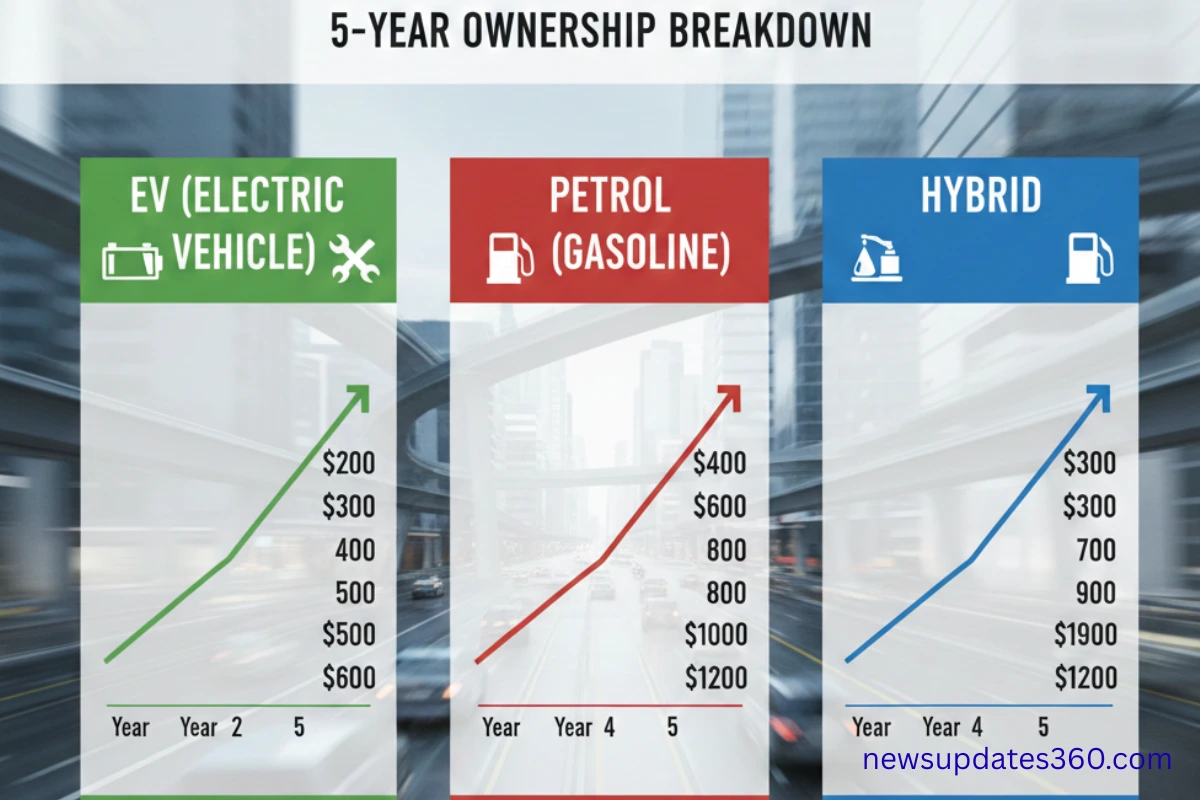
5-Year Maintenance Cost Breakdown
Electric Vehicle – 5 Years
-
Routine service: ₹30,000
-
Brake maintenance: ₹8,000
-
Cooling system checks: ₹5,000
-
Software updates: Mostly free
Total (5 years): ₹48,000
EVs shine here because there is no engine oil, clutch, gearbox, or exhaust system. This is why experts predict EVs will dominate Car Maintenance Cost in 2026 rankings.
Petrol Car – 5 Years
-
Engine oil & filters: ₹40,000
-
Spark plugs & belts: ₹10,000
-
Brake system work: ₹15,000
-
Clutch & transmission wear: ₹12,000
-
Unexpected engine repairs: ₹16,000
Total (5 years): ₹93,000
Petrol vehicles remain the most expensive to maintain due to mechanical complexity.
Hybrid Car – 5 Years
-
Engine maintenance: ₹35,000
-
Hybrid system servicing: ₹20,000
-
Brake components: ₹10,000
-
Battery cooling system: ₹8,000
Total (5 years): ₹73,000
Hybrids reduce fuel bills but still require dual-system maintenance, placing them between petrol and EVs in Car Maintenance Cost in 2026.

Fuel vs Electricity Cost Over 5 Years
Assumptions
-
Annual distance: 12,000 km
-
Petrol price: ₹110/litre
-
Electricity rate: ₹8/unit
| Vehicle Type | Energy Cost (5 Years) |
|---|---|
| EV | ₹68,500 |
| Petrol | ₹4,40,000 |
| Hybrid | ₹2,64,000 |
Fuel cost alone makes petrol ownership significantly more expensive, even before counting maintenance.
Total 5-Year Ownership Cost
| Vehicle | Maintenance | Energy | Total |
|---|---|---|---|
| EV | ₹48,000 | ₹68,500 | ₹1,16,500 |
| Petrol | ₹93,000 | ₹4,40,000 | ₹5,33,000 |
| Hybrid | ₹73,000 | ₹2,64,000 | ₹3,37,000 |
This table clearly shows why Car Maintenance Cost in 2026, combined with energy expenses, favors electric vehicles.
Battery Replacement: Myth vs Reality
A common fear among buyers is battery replacement cost.
Reality in 2026
-
EV batteries last 8-10 years
-
Most brands offer 8-year warranty
-
Battery prices have dropped sharply
For a 5-year ownership period, battery replacement does not impact Car Maintenance Cost in 2026 at all.
Reliability Comparison
| Factor | EV | Petrol | Hybrid |
|---|---|---|---|
| Engine failure risk | None | Medium | Medium |
| Transmission issues | None | High | Medium |
| Software dependency | High | Low | Medium |
EVs rely more on software, while petrol cars depend heavily on mechanical reliability.
Which Vehicle Type Is Best for You?
Choose an EV if:
-
You drive mostly in the city
-
Home charging is available
-
You want the lowest long-term expenses
Choose a Petrol Car if:
-
Annual usage is low
-
Long highway trips are frequent
-
Charging infrastructure is unavailable
Choose a Hybrid if:
-
You want fuel savings without charging dependency
-
City and highway usage is balanced
Understanding Car Maintenance Cost in 2026 helps match the right vehicle to your lifestyle.
Future Outlook: What Will Change After 2026?
-
EV servicing costs will reduce further
-
Petrol maintenance will become more expensive due to emission norms
-
Hybrid technology will improve but remain complex
Experts agree that Car Maintenance Cost in 2026 is just the beginning of a long-term shift toward electric mobility.
Frequently Asked Questions
Are EVs really cheaper to maintain?
Yes, due to fewer moving parts and no engine-related servicing.
Do hybrids cost more to service than petrol cars?
No, but they are more expensive than EVs.
Is petrol still a good option in 2026?
Only for low-usage or short-term ownership.
Final Verdict
When all numbers are added, electric vehicles clearly offer the lowest ownership burden. Petrol cars remain the most expensive, while hybrids sit in the middle.
If your goal is to minimize long-term expenses, Car Maintenance Cost in 2026 strongly favours EVs.
For more info visit auto-gully.com
Conclusion
The smart car buyer in 2026 looks beyond showroom prices and focuses on real ownership expenses. Maintenance, fuel, reliability, and future readiness all point toward one conclusion: electric vehicles are the most economical choice.
By understanding Car Maintenance Cost in 2026, you can save lakhs over five years and avoid costly ownership surprises.
For more info visit spinny.com
Disclaimer: The costs and figures mentioned in this article are approximate estimates based on market trends in 2026 and may vary depending on location, usage, brand, and driving conditions. Actual maintenance and ownership costs can differ, so readers are advised to verify details with manufacturers or authorized service centers before making a purchase decision.
More Updates
- Mahindra XUV 7XO Launch on January 5, 2026: Complete Details of XUV700’s Most Premium Upgrade Yet Honest Review
- Tata Sierra Car: Complete Guide to Design, Features, Performance, Price & Future Vision 2025
- Audi Q3 The Perfect Blend of Luxury, Power & Style
- Mahindra XUV700 2025: The Ultimate 7-Seater SUV Redefining Luxury and Performance
- Yamaha EC-06 Electric Scooter: Is This India’s New Urban Commute King Best Guide?


