5 Things to Know Before Buying a Car in India – Complete Car Buying Guide for Smart Buyers

Planning to Best things to know before buying a car in IndiaBuying a Car in India? Discover the 5 most important things to know before purchasing a car, including budget, mileage, safety, maintenance, and resale value. Read this complete car buying guide before making your decision.
5 Things to Know Before Buying a Car in India
Buying a car is one of the biggest financial decisions for many families. A car is not just a vehicle; it becomes part of your daily lifestyle, comfort, and future planning. Many people purchase a car emotionally without researching properly and later face problems related to maintenance, mileage, budget, or resale value. That is why understanding the process of buying a car in India is extremely important before making a final decision.
The Indian automobile market is growing rapidly with hundreds of options available in hatchbacks, sedans, SUVs, and electric vehicles. While having more options is beneficial, it also creates confusion among buyers. Whether you are a first-time buyer or upgrading your old vehicle, this detailed guide about buying a car in India will help you make a smart and informed choice.
In this blog, we will discuss the five most important things every buyer should know before purchasing a car. These points will save you money, reduce future stress, and help you select the perfect vehicle according to your needs.
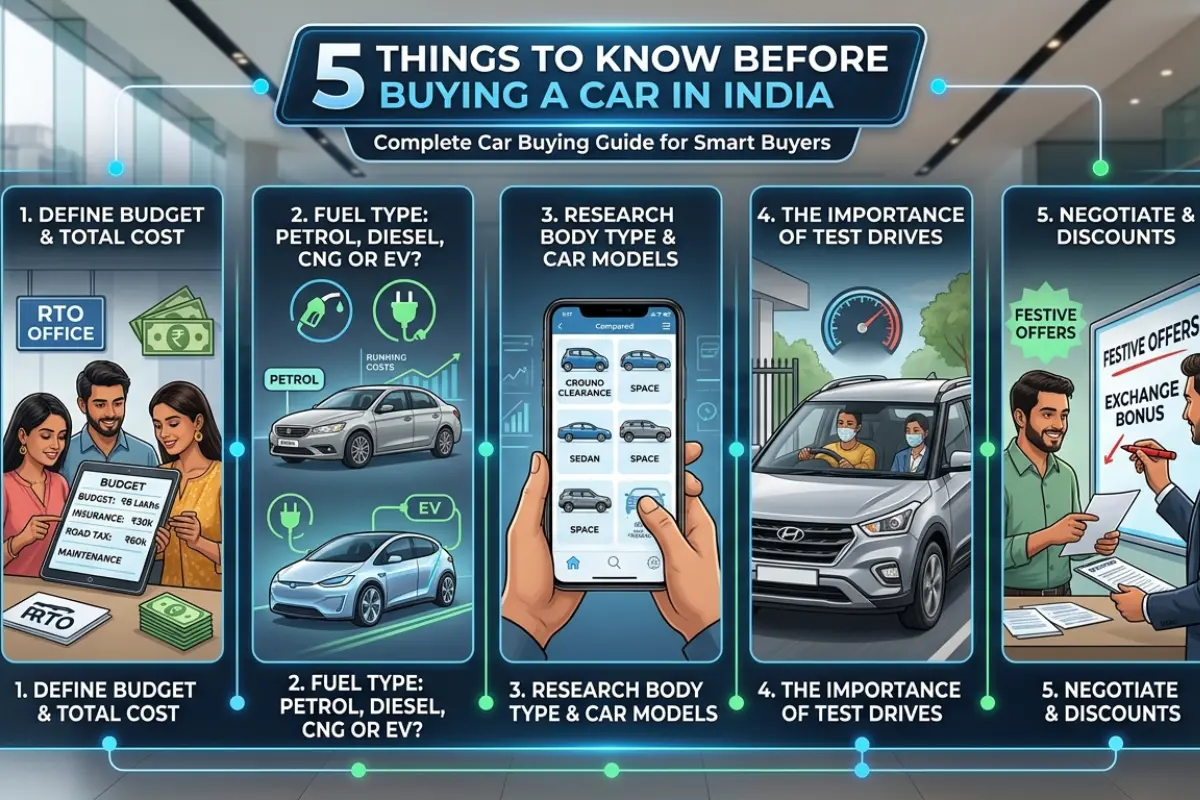
1. Decide Your Budget Before Buying a Car
The first and most important step in buying a car in India is deciding your budget properly. Most buyers focus only on the showroom price and ignore additional expenses such as insurance, registration, fuel costs, servicing, accessories, and loan EMI. A car purchase should always match your financial condition and monthly income. Buying an expensive car beyond your budget can create long-term financial pressure.
Before visiting a dealership, calculate your complete budget carefully. Experts usually recommend that your car EMI should not exceed 15–20% of your monthly salary. If you are taking a car loan, compare interest rates from multiple banks and financial institutions. A lower interest rate can save thousands of rupees over time.
You should also consider the purpose of the car. If you need a vehicle for daily city travel, a compact hatchback may be a better option than a large SUV. On the other hand, families who travel frequently may require bigger and more comfortable cars. Smart budgeting is the foundation of successful buying a car in India because it helps avoid unnecessary financial stress later.
Another important point is the down payment. A higher down payment reduces your EMI burden and loan tenure. Many buyers make the mistake of choosing zero down payment offers without understanding the long-term interest cost. Always calculate the total amount payable before signing any loan agreement.
Top 25 Cars Selling in January: A Deep, Buyer-Focused Analysis of India’s Most Popular Cars
2. Understand Fuel Type and Mileage
Fuel efficiency plays a major role in buying a car in India because fuel prices continue to increase every year. Choosing the right fuel type according to your usage can help you save a significant amount of money in the long run. In India, buyers generally choose between petrol, diesel, CNG, hybrid, and electric vehicles.
Petrol cars are suitable for people with lower monthly driving because they are cheaper to buy and maintain. Diesel cars provide better mileage and are ideal for highway travel or heavy usage, but diesel vehicles are usually more expensive and have higher maintenance costs. CNG cars are becoming very popular due to lower fuel expenses, especially for city commuters.
Electric vehicles are also entering the Indian market rapidly. While EVs have higher upfront costs, they offer lower running expenses and eco-friendly benefits. However, buyers should check charging infrastructure availability in their city before choosing an electric car. Understanding your driving pattern is extremely important while buying a car in India.
Mileage is another key factor that directly impacts your monthly budget. Many people get attracted to stylish cars but later regret poor fuel efficiency. Always compare ARAI-certified mileage and real-world mileage reviews before finalizing your purchase. Even a small difference in mileage can lead to major savings over several years.
It is also important to remember that mileage depends on driving habits, traffic conditions, servicing quality, and road types. Therefore, always read customer reviews and watch expert comparisons before making your decision.
3. Check Safety Features Carefully
Safety should never be ignored while buying a car in India. In the past, Indian buyers mostly focused on mileage and price, but now awareness regarding safety has increased significantly. A car with strong safety features can protect passengers during accidents and save lives.
Before purchasing any vehicle, check its Global NCAP or Bharat NCAP safety ratings. Cars with higher safety ratings usually provide better structural strength and passenger protection. Features such as airbags, ABS (Anti-lock Braking System), EBD, traction control, hill assist, rear parking sensors, and electronic stability control are extremely important for safe driving.
Many low-budget cars compromise on safety to reduce costs. Buyers often ignore this aspect because they want a cheaper option. However, compromising on safety can become dangerous in the future. Investing slightly more in a safer car is always a wise decision during buying a car in India.
Families with children should especially focus on child safety locks, ISOFIX child seat mounts, and rear seat safety features. Long-distance travelers should consider cars with strong braking systems and stable driving performance. Modern cars also offer advanced driver assistance systems that improve safety during highway driving.
Road accidents are increasing in India every year, making safety a top priority for responsible buyers. A stylish car with poor safety standards may look attractive initially but can become risky during emergencies. Therefore, safety must always remain a major factor in your decision-making process.
4. Research Maintenance and Service Costs
Maintenance costs are often ignored during buying a car in India, but they significantly impact ownership experience. Some cars may look affordable initially but later become expensive due to high servicing costs, spare part prices, and poor fuel economy.
Before finalizing your car, research annual maintenance expenses, service intervals, and availability of service centers in your area. Brands with strong service networks provide a smoother ownership experience and faster repairs. Availability of spare parts is also an important consideration because rare parts can increase waiting time and repair expenses.
Many buyers choose luxury vehicles without understanding their maintenance burden. Premium cars generally have higher servicing charges, expensive spare parts, and costly insurance premiums. Therefore, it is important to balance comfort and affordability while buying a car in India.
You should also read customer reviews about after-sales service quality. A good dealership and service experience can make car ownership stress-free. Poor customer support often leads to frustration and unnecessary expenses. Always compare service packages and warranty benefits before making your purchase.
Extended warranty and maintenance packages can provide additional financial protection. These packages help reduce unexpected repair costs and provide peace of mind. It is also beneficial to understand the resale maintenance history of the model you are planning to buy.
Choosing a reliable car brand with affordable maintenance can save lakhs of rupees over the life of the vehicle. Therefore, maintenance research is not optional—it is a necessary step for smart buyers.

5. Consider Resale Value Before Purchasing
Resale value is one of the smartest considerations in buying a car in India. Most buyers focus only on current needs and ignore future resale potential. However, a car with strong resale value helps recover a good portion of your investment when you decide to upgrade or sell the vehicle.
Brands with good reliability, fuel efficiency, and low maintenance usually offer better resale value. Popular models from trusted manufacturers are easier to sell because buyers trust their performance and service support. On the other hand, unpopular or discontinued models often lose value quickly.
Color choice, fuel type, mileage, condition, and servicing history also affect resale value. White, silver, and grey cars generally have higher demand in the Indian used-car market. Maintaining proper service records increases buyer confidence and improves resale pricing.
SUVs and compact SUVs currently have strong demand in India, which positively affects their resale value. Similarly, cars known for reliability and durability maintain good market demand even after several years. Therefore, resale potential should always be analyzed while buying a car in India.
Depreciation is unavoidable, but smart buyers minimize losses by choosing practical and reliable vehicles. A car with excellent resale value reduces your long-term ownership cost and provides better financial flexibility for future upgrades.
Best Affordable Family Cars in India – Complete Buying Guide 2026
Importance of Test Driving Before Final Decision
A test drive is a crucial part of buying a car in India because it helps you understand the real driving experience. Never buy a car based only on online reviews, advertisements, or showroom appearance. During the test drive, check seating comfort, steering response, braking performance, visibility, suspension quality, and cabin noise levels.
Drive the vehicle on different road conditions if possible. Pay attention to gear shifting, pickup, air conditioning performance, and rear-seat comfort. Families should also test passenger space and boot capacity before purchasing.
A proper test drive helps identify whether the vehicle truly matches your driving style and daily needs. Many buyers skip this step and later regret their decision after purchase.

Why Comparing Multiple Cars Is Important
One of the smartest strategies in buying a car in India is comparing multiple options before making the final decision. Never finalize the first car you see in a showroom. Compare features, prices, mileage, safety ratings, maintenance costs, and resale value across different brands.
Online comparison tools and expert reviews can help you understand the strengths and weaknesses of each model. Sometimes a slightly higher-priced car may offer much better safety, comfort, and long-term savings.
Comparison shopping ensures you get maximum value for your money and prevents emotional buying decisions.
Kia India Sales 2026: Complete Growth Analysis, SUV Success, EV Expansion & Future Plans
Frequently Asked Questions (FAQs)
Q1. What is the best time for buying a car in India?
The best time for buying a car in India is usually during festive seasons like Diwali, Navratri, and year-end sales because dealerships provide discounts, exchange bonuses, and special finance offers.
Q2. Which fuel type is best for Indian buyers?
The best fuel type depends on your driving usage. Petrol is ideal for low usage, diesel for long-distance travel, CNG for cost savings, and electric vehicles for eco-friendly driving.
Q3. How important is a car safety rating?
Safety ratings are extremely important because they indicate how well a car can protect passengers during accidents. Always prefer vehicles with higher safety ratings.
Q4. Should I buy a new car or a used car?
A new car offers warranty and reliability, while a used car is more budget-friendly. Your decision should depend on your financial condition and personal requirements.
Q5. How can I improve my car’s resale value?
Regular servicing, maintaining proper records, keeping the car clean, and avoiding major accidents can significantly improve resale value.
Top 5 EV Cars Launching in 2026 in India – Price, Features, Range & Launch Date
Conclusion
Buying a car is a major life decision that requires proper planning and research. From budgeting and fuel selection to safety, maintenance, and resale value, every factor plays a crucial role in long-term satisfaction. Smart buyers always think beyond showroom looks and marketing offers.
The process of buying a car in India becomes much easier when you understand your requirements clearly and compare options carefully. A well-researched purchase not only saves money but also provides comfort, safety, and peace of mind for years.
Before finalizing your next vehicle, remember these five important points and take your time to make the best decision. A car should improve your lifestyle not create financial or maintenance stress.
For More Info Visit bhp.com
Related Updates
- Toyota Innova Crysta 2026: लग्जरी, दमदार इंजन और प्रीमियम फीचर्स के साथ फिर मचाने आ रही है तहलका | Luxury, Powerful Engine & Premium Features Set to Rule Again
- Honda Cars Plan 6 New Models in 2026-2027: Big SUV and EV Launches Set to Transform the Indian Market
- Tata Tiago EV Launch in India ने बदल दिया भारतीय ऑटो सेक्टर Best Guide In 2026
- नई Tata Harrier खरीदने से पहले जान लें ये 6 दमदार बातें | 6 Powerful Things To Know Before Buying Tata Harrier
- BMW X1 highway performance: The Ultimate Guide to Performance, Comfort, and Efficiency