Winter in India: State-Wise Weather Updates, Cold Waves, Fog & Seasonal Impact best info in 2026
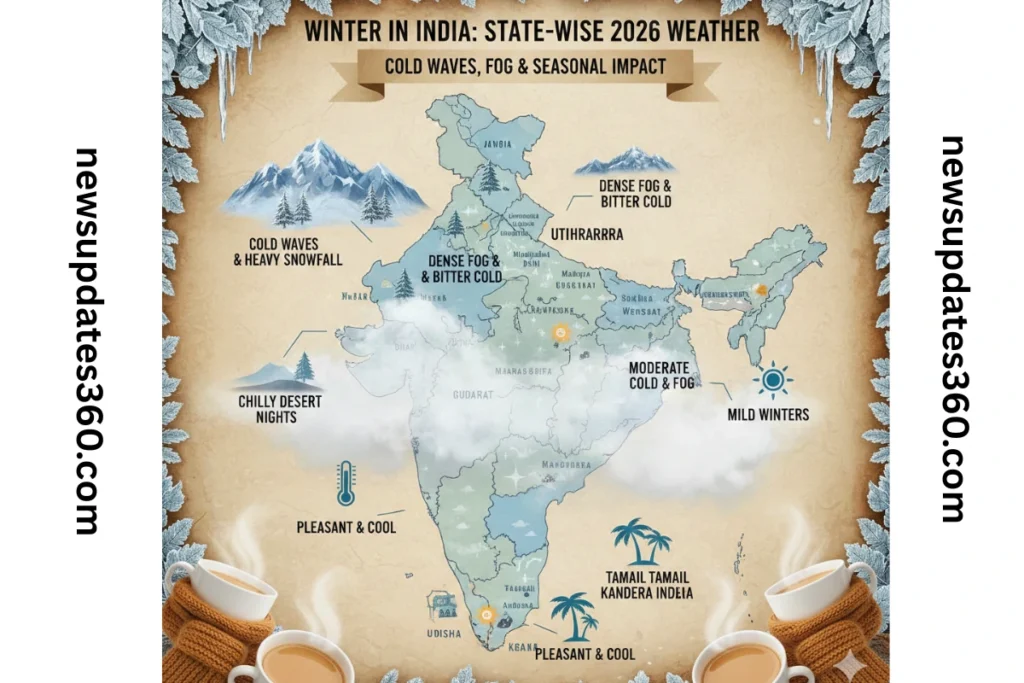
Winter in India state wise weather updates covering cold waves, snowfall, fog alerts, health impact, agriculture effects and IMD forecasts across all Indian states.
Introduction
Winter in India is not the same everywhere. Due to India’s vast geography, Winter in India state wise varies significantly from freezing cold in the Himalayas to mild and pleasant weather in coastal regions. This season impacts transportation, agriculture, health, tourism, and daily life across the country. Understanding winter weather state wise helps people stay prepared and safe.
Delhi – Winter Weather in Detail
Winter in India state wise places Delhi among the most affected regions during the winter season. Delhi’s winter typically begins in late November and intensifies through December and January. The city experiences a sharp drop in minimum temperatures, often falling below 5°C during peak winter nights. Cold waves are frequent, and the wind chill factor makes temperatures feel even lower.
One of the most defining features of Delhi’s winter is dense fog. Foggy conditions severely reduce visibility during early morning hours, leading to delays and cancellations of flights and trains. Road accidents also increase due to low visibility. Winter in India state wise data consistently shows Delhi as a fog-prone urban centre.
Air pollution becomes a major concern during winter. Low wind speed and temperature inversion trap pollutants close to the ground, causing poor air quality. This combination of cold weather and pollution leads to respiratory issues, especially among children and the elderly.
Daily life slows down in winter. Schools sometimes delay morning timings, and outdoor activities reduce significantly. Homeless populations face serious risks, prompting authorities to open night shelters and distribute blankets.
From a public health perspective, winter in India state wise highlights Delhi as a region requiring constant monitoring. Cold-related illnesses, flu, and breathing problems increase. Despite challenges, winter mornings also bring clear skies after fog lifts, making afternoons pleasant.
Uttar Pradesh – Severe Cold & Fog Patterns
Winter in India state wise shows Uttar Pradesh as one of the most winter-affected states due to its vast geography. Western Uttar Pradesh often experiences intense cold waves, while eastern regions face prolonged foggy conditions. Minimum temperatures regularly drop between 2°C and 6°C during peak winter.
Dense fog is a major winter challenge in Uttar Pradesh. Visibility frequently reduces to a few meters, severely impacting rail and road transportation. Train schedules are commonly disrupted, making winter travel difficult.
Agriculture is heavily affected during winter. Frost conditions pose a serious risk to crops such as potatoes, vegetables, and pulses. Farmers often take preventive measures like irrigation to protect crops from frost damage.
Winter in India state wise also highlights social impact in Uttar Pradesh. Schools in many districts adjust timings to protect children from extreme cold. Government authorities activate cold-relief measures, including shelter homes and blanket distribution programs.
Health issues increase during winter months. Cold waves contribute to respiratory infections, joint pain, and seasonal illnesses. Rural populations are more vulnerable due to limited access to heating facilities.
Despite these challenges, winter also brings some benefits. Clear skies during the daytime support agricultural planning, and energy demand rises, supporting local economies. Uttar Pradesh’s winter reflects how climate impacts both rural and urban life in India.
Punjab – Agriculture-Driven Winter Impact
Winter in India state wise places Punjab at the centre of winter-agriculture interactions. The state experiences cold nights and cool days, with temperatures sometimes nearing the freezing point. Cold winds from the north increase chill levels across the region.
Fog is a common winter feature in Punjab. Early mornings often witness thick fog, affecting road safety and transportation. Highways see increased accident risks during winter months.
Agriculture is deeply impacted by winter conditions. Wheat crops, which are crucial for Punjab’s economy, face frost risks during extreme cold spells. Farmers closely monitor weather forecasts to safeguard crops.
Winter in India state wise data shows that cold wave warnings are regularly issued in Punjab. These warnings help farmers and residents take precautionary measures. The state government also activates cold-weather relief for vulnerable populations.
Health concerns rise during winter. Cold exposure leads to seasonal illnesses, especially in rural areas. However, Punjab’s well-developed healthcare infrastructure helps manage winter-related health challenges.
Overall, Punjab’s winter reflects a balance of agricultural dependence and climate vulnerability, making it a key state in winter weather analysis.
Haryana – Cold Nights & Fog Challenges
Winter in India state wise identifies Haryana as a state with persistent winter fog and cold nights. Temperatures frequently drop below 5°C, particularly in northern and central districts. Wind chill further intensifies cold conditions.
Dense fog is the biggest winter challenge in Haryana. It disrupts road transport, especially on major highways connecting Delhi and other northern states. Visibility issues contribute to traffic congestion and accidents.
Agriculture plays a vital role in Haryana’s winter story. Crops like wheat and mustard are sensitive to frost, making weather monitoring essential for farmers.
Winter in India state wise highlights Haryana’s proactive approach to winter safety. Night shelters are opened for homeless populations, and local administrations issue advisories during severe cold waves.
Health impacts are noticeable. Joint pain, respiratory infections, and seasonal flu cases rise during winter. Elderly populations require special care.
Haryana’s winter showcases how climate affects both urban centres and agricultural communities, emphasizing preparedness and awareness.
Rajasthan – Desert State with Freezing Nights
Winter in India state wise presents Rajasthan as a unique case. Despite being a desert state, Rajasthan experiences extremely cold nights during winter. Temperatures in some regions drop close to 0°C.
Cold winds significantly increase chill levels, especially in open desert areas. Mount Abu often records the lowest temperatures in the state, sometimes experiencing frost conditions.
Daily life in Rajasthan changes during winter. People adapt by altering routines, wearing heavy woollens, and avoiding early morning travel.
Winter in India state wise shows Rajasthan’s winter as dry but intense. Fog is less common, but cold stress is significant, particularly in rural areas.
Health risks include hypothermia for vulnerable populations. Authorities run winter relief programs to protect the homeless and economically weaker sections.
Rajasthan’s winter proves that climate extremes are not limited to mountainous regions.
Himachal Pradesh – Snowfall & Cold Extremes
Winter in India state wise highlights Himachal Pradesh as a major snowfall state. Higher altitudes receive heavy snowfall, while lower regions experience severe cold.
Snowfall disrupts road connectivity and daily life. Many mountain roads remain closed for weeks during peak winter.
Tourism peaks during winter due to snow destinations, boosting the local economy. However, avalanche risks and weather warnings remain a concern.
Winter in India state wise marks Himachal as a state requiring strong disaster management systems.
Uttarakhand – Mountain Winter Challenges
Uttarakhand experiences harsh winters in hilly areas and moderate cold in plains. Snowfall affects pilgrimage routes and hill towns.
Cold waves and icy roads create safety concerns. Villages in high altitudes face isolation during heavy snowfall.
Winter in India state wise highlights Uttarakhand’s need for infrastructure resilience.
Jammu & Kashmir – Extreme Winter Conditions
Winter in India state wise identifies Jammu & Kashmir as the coldest region. Sub-zero temperatures are common, and water bodies freeze.
Snowfall disrupts power supply and transportation. Daily life requires constant adaptation to extreme cold.
Ladakh – Harshest Winter in India
Ladakh experiences the most severe winters in India. Temperatures drop far below zero, and life continues under extreme conditions.
Winter in India state wise concludes Ladakh as the most climatically challenging region.
Winter in India State Wise Central & Western India
Madhya Pradesh – Cold Nights and Dry Winters
Winter in India state wise places Madhya Pradesh among the states that experience moderate but noticeable winter conditions. Winters here usually begin in late November and peak during December and January. While the days remain sunny and pleasant, nights often turn quite cold, especially in northern and central districts.
Minimum temperatures in several parts of Madhya Pradesh drop below 7°C during intense cold spells. Cities like Bhopal, Gwalior, and Indore regularly report chilly mornings. Cold winds during night time increase discomfort, particularly in rural and open areas.
Fog is not as severe as in northern plains, but early morning mist is common in riverine regions. This can slow down road transport during early hours. Winter in India state wise shows that Madhya Pradesh rarely experiences extreme cold waves, yet the cold is enough to affect daily routines.
Agriculture plays a major role in winter impact. Rabi crops such as wheat, gram, and mustard benefit from cool temperatures, but sudden cold spells can stress crops. Farmers closely monitor weather updates during winter months.
Health issues increase mildly during winter. Cold-related ailments like cough, cold, and joint pain are common, especially among elderly people. However, the dry climate reduces the spread of moisture-related illnesses.
Overall, winter in India state wise highlights Madhya Pradesh as a state with balanced winter conditions—cold nights, comfortable days, and manageable seasonal challenges.
Chhattisgarh – Mild Winters with Cool Mornings
Winter in India state wise shows Chhattisgarh as a state with gentle and comfortable winters. The winter season here is short and mild compared to northern India. Temperatures rarely fall to extreme levels, making winters relatively pleasant.
Morning hours are the coldest part of the day. In some districts, minimum temperatures drop to around 10°C-12°C. The chill is most noticeable in rural and forested areas where cold air settles overnight.
Fog is minimal, and visibility issues are rare. This allows uninterrupted transport and daily activities during winter. Winter in India state wise data indicates that Chhattisgarh does not face cold-wave alerts frequently.
Agricultural activities continue smoothly during winter. Crops such as rice (late harvest), pulses, and vegetables grow well in cooler conditions. Farmers benefit from stable weather patterns.
Health impacts are limited. Seasonal flu and minor respiratory infections appear, but extreme cold-related illnesses are uncommon. People usually require only light woollen clothing.
Winter tourism also sees a slight rise, as cooler temperatures make outdoor travel more comfortable. Overall, winter in India state wise categorizes Chhattisgarh as one of the least winter-affected states.
Maharashtra – Regional Winter Variations
Winter in India state wise reveals Maharashtra as a state with significant regional variation. Coastal areas experience mild winters, while interior regions such as Vidarbha and Marathwada feel a stronger winter chill.
In cities like Mumbai and Konkan belt, winter temperatures remain pleasant, usually between 18°C–22°C. The sea moderates the climate, preventing sharp temperature drops. Mornings and evenings feel slightly cool but comfortable.
In contrast, Vidarbha region experiences colder nights. Minimum temperatures can fall to around 8°C–10°C in places like Nagpur. Dry air and clear skies increase night-time cooling.
Fog is generally absent, ensuring smooth transport operations. Winter in India state wise data shows Maharashtra rarely faces winter-related disruptions.
Agriculture benefits from winter weather. Crops like wheat, vegetables, and fruits grow well under cooler conditions. Health-wise, winter brings fewer complications compared to summer heat waves.
Maharashtra’s winter season is often considered ideal for travel, festivals, and outdoor activities. Winter in India state wise highlights Maharashtra as a state with comfortable and economically favourable winters.
Gujarat – Dry and Pleasant Winter Climate
Winter in India state wise places Gujarat among states with dry, cool, and stable winter weather. The winter season is marked by clear skies, low humidity, and comfortable temperatures.
Daytime temperatures range between 20°C–25°C, while nights can drop to around 8°C-12°C, especially in northern Gujarat. Cold winds during nights add to the chill factor.
Fog is rare, making winter travel safe and smooth. Roads and railways operate without major seasonal disruptions. Winter in India state wise shows Gujarat as one of the most winter-friendly states.
Agriculture benefits significantly. Winter crops such as wheat, cumin, and vegetables thrive in dry conditions. Farmers prefer winter as a productive season.
Health concerns are minimal. Cold-related illnesses are limited, and the dry air reduces respiratory complications. People usually require light winter clothing.
Tourism peaks during winter due to favourable weather conditions. Overall, winter in India state wise highlights Gujarat as a state where winter enhances quality of life.
Goa – Short and Comfortable Winters
Winter in India state wise shows Goa as a state with short, mild, and pleasant winters. The winter season is marked by cooler evenings and mornings, while daytime remains warm.
Temperatures typically range from 18°C-28°C. The coastal influence keeps winter mild, with no cold waves or fog issues. Winter in India state wise confirms Goa does not experience extreme winter conditions.
The dry winter climate is ideal for tourism. Beaches, festivals, and outdoor events attract visitors from across India and abroad.
Agriculture sees limited winter impact, as farming is less dependent on winter rainfall. Health issues related to cold are rare.
Winter in India state wise categorizes Goa as a destination where winter improves lifestyle and economic activity.
Dadra & Nagar Haveli and Daman & Diu – Mild Coastal Winter
Winter in India state wise places these Union Territories in the mild winter category. Coastal location ensures stable temperatures throughout the season.
Winter temperatures remain comfortable, with cool nights and warm days. There is no fog or cold wave threat. Winter in India state wise data shows minimal winter-related challenges.
Fishing, tourism, and daily activities continue smoothly. Health impacts are negligible, and winter is considered the best season for outdoor work.
Bihar – Fog-Dominated Winter Conditions
Winter in India state wise places Bihar among the most fog-affected states during winter. The season usually starts in late November and intensifies through December and January. Although temperatures do not fall as sharply as in mountainous regions, the impact of winter is strongly felt due to dense fog and cold winds.
Minimum temperatures in Bihar often range between 5°C and 9°C during peak winter. Early mornings are extremely cold, especially in rural areas near rivers where cold air settles overnight. Fog reduces visibility to a few meters, severely disrupting road and rail transport.
Winter in India state wise shows that Bihar frequently experiences train delays and cancellations due to fog. Highway travel also becomes risky, increasing the chances of road accidents.
Agriculture is influenced by winter weather. Rabi crops such as wheat and vegetables benefit from cool temperatures, but prolonged fog and frost can damage crops in low-lying areas. Farmers often rely on weather advisories during winter.
Health concerns increase in winter months. Cold-related illnesses, respiratory infections, and seasonal flu cases rise. Elderly people and children are most vulnerable due to prolonged exposure to cold and damp conditions.
Daily life slows down in winter. Schools often adjust timings, and outdoor work begins later in the day. Winter in India state wise highlights Bihar as a state where fog is a bigger challenge than extreme cold.
Jharkhand – Cool and Dry Winter Climate
Winter in India state wise shows Jharkhand experiencing moderate winter conditions. Winters are dry, with clear skies and cool temperatures. The season is comfortable compared to northern plains.
Night temperatures often fall between 6°C and 10°C, especially in plateau regions. Cold mornings are common, but fog is not widespread, allowing smoother daily activities.
Agriculture continues efficiently during winter. Crops such as wheat, pulses, and vegetables benefit from cooler temperatures. Winter in India state wise shows Jharkhand’s winter supports agricultural productivity.
Health impacts are limited. Seasonal cold and flu cases occur, but extreme cold-related illnesses are rare. Rural populations adjust easily due to gradual seasonal changes.
Winter tourism in forest and hill regions increases due to pleasant weather. Jharkhand’s winter reflects climatic stability within eastern India.
West Bengal – Mixed Winter Conditions
Winter in India state wise highlights West Bengal as a state with diverse winter patterns. Coastal and plain regions experience mild winters, while northern districts and hill areas face colder conditions.
Minimum temperatures in plains usually range from 8°C to 12°C. Fog is common in northern districts, especially during early mornings, affecting transport services.
Darjeeling and surrounding hill regions experience significantly colder weather, sometimes accompanied by frost. Winter in India state wise places these areas in the cold-affected category.
Agriculture benefits from winter, especially for vegetables and Rabi crops. However, fog can affect crop health and harvesting schedules.
Health concerns include cold-related infections and breathing issues, particularly in fog-prone areas. Urban areas face mild pollution during winter.
Overall, winter in India state wise categorizes West Bengal as a state with region-specific winter challenges.
Odisha – Comfortable Coastal Winters
Winter in India state wise places Odisha among states with pleasant and comfortable winters. The coastal influence keeps temperatures moderate throughout the season.
Daytime temperatures range between 20°C and 25°C, while nights can drop to around 12°C-15°C. Fog is minimal, and cold waves are rare.
Agriculture thrives during winter. Crops like vegetables, pulses, and oilseeds benefit from stable weather conditions. Winter in India state wise shows Odisha as agriculturally stable in winter.
Health issues are limited, with only minor seasonal illnesses. Winter is also considered an ideal time for travel and outdoor activities.
Odisha’s winter enhances quality of life and economic activities, especially tourism.
North-East India – Winter Overview
Winter in India state wise highlights the North-Eastern region as climatically diverse. While plains experience mild winters, hill states face cold temperatures and occasional frost.
The region’s geography causes significant variation in winter intensity. Fog, cold winds, and rainfall patterns differ across states.
Winter in India state wise emphasizes the need for localized weather preparedness in the North-East.
Assam – Foggy Mornings and Cool Days
Winter in India state wise shows Assam experiencing cool and foggy winters. Morning fog is common in riverine areas, especially near the Brahmaputra.
Temperatures remain moderate, with minimums around 8°C-12°C. Cold waves are rare but chilly mornings affect daily routines.
Agriculture benefits from winter weather. Crops such as mustard, vegetables, and pulses grow well. Winter in India state wise shows Assam’s winter supports farming.
Health concerns include seasonal cold and respiratory infections, but severe cold-related illnesses are uncommon.
Arunachal Pradesh – Severe Cold in High Altitudes
Winter in India state wise places Arunachal Pradesh among the coldest states due to high altitude terrain. Winters are harsh in mountainous regions.
Temperatures in higher altitudes often drop below freezing. Snowfall blocks roads and isolates villages during peak winter.
Daily life becomes challenging due to limited connectivity. Winter in India state wise highlights infrastructure challenges in Arunachal Pradesh.
Health risks include hypothermia and respiratory illnesses. Preparedness is essential for survival during winter.
Meghalaya – Cool and Damp Winter Climate
Winter in India state wise shows Meghalaya experiencing cool and humid winters. Mornings and nights are chilly, while days remain mild.
Fog and mist are common due to high humidity. Agriculture continues steadily, with minimal winter disruption.
Health issues include respiratory infections due to damp cold. Winter in India state wise highlights Meghalaya’s unique climatic conditions.
Manipur, Mizoram, Nagaland & Tripura – Mild Hill Winters
Winter in India state wise categorizes these states under mild hill winters. Temperatures are cool but not extreme.
Night temperatures can fall below 10°C in hilly areas. Fog and mist are common in valleys.
Agriculture benefits from winter climate. Health issues are minimal. Winter in India state wise shows these states enjoy stable winters.
For more info visit nathab.com
Winter in India State Wise – Southern India
Tamil Nadu – Mild and Dry Winter Season
Winter in India state wise places Tamil Nadu among the states that experience mild and dry winters. Unlike northern India, winter here is not associated with extreme cold. The season usually begins in December and continues until early February, marked mainly by cooler nights and pleasant mornings.
Daytime temperatures in most parts of Tamil Nadu remain between 25°C and 30°C, while night time temperatures can drop to around 18°C-20°C. In interior districts and hill regions like Nilgiris, temperatures fall further, creating a noticeable winter chill.
Fog is rare in Tamil Nadu, and transport services continue without disruption. Winter in India state wise shows that the state does not experience cold waves or frost conditions, making winter largely comfortable for daily life.
Agriculture benefits significantly during winter. Crops such as paddy, sugarcane, vegetables, and fruits grow well under stable weather conditions. Farmers rely on winter as a productive agricultural season.
Health impacts are minimal. Mild winter conditions reduce heat stress without causing cold-related illnesses. Winter is also considered an ideal season for outdoor activities and tourism.
Overall, winter in India state wise categorizes Tamil Nadu as a state where winter improves comfort and productivity without posing major challenges.
Kerala – Pleasant Tropical Winter
Winter in India state wise highlights Kerala as a state with pleasant tropical winters. The coastal climate ensures that temperatures remain moderate throughout the season. Winter here is more about reduced humidity than cold.
Daytime temperatures generally range between 26°C and 30°C, while night time temperatures hover around 20°C-22°C. Early mornings feel cool, especially in highland areas like Wayanad and Idukki.
Fog is minimal, and rainfall is low, making winter an ideal season for travel and tourism. Winter in India state wise shows Kerala as one of the most winter-friendly states.
Agriculture remains stable during winter. Crops such as spices, coconut, and vegetables benefit from cooler and drier conditions. Fishing activities also continue smoothly due to calm sea conditions.
Health concerns are limited. Winter reduces mosquito-borne diseases and heat-related illnesses. People enjoy outdoor activities, festivals, and travel.
Kerala’s winter enhances lifestyle quality and supports tourism-driven economic growth.
Karnataka – Comfortable Winter Across Regions
Winter in India state wise places Karnataka in the moderate winter category. The state experiences noticeable seasonal cooling without extreme cold. Winters are generally dry, with cool mornings and mild afternoons.
In Bengaluru and interior regions, night time temperatures often drop to 12°C-15°C, while daytime remains comfortable. Coastal Karnataka experiences milder winters due to sea influence.
Fog is uncommon, and winter rarely disrupts transport or daily life. Winter in India state wise highlights Karnataka as a state with smooth winter transitions.
Agriculture benefits from winter climate. Crops such as ragi, pulses, and vegetables grow well. Farmers face minimal weather-related risks during winter.
Health impacts include mild cold and joint pain in elderly populations, but serious cold-related illnesses are rare.
Overall, winter in India state wise shows Karnataka as a state where winter enhances comfort and productivity.
Andhra Pradesh – Stable and Mild Winter Weather
Winter in India state wise identifies Andhra Pradesh as a state with stable and mild winter conditions. Winters are short and comfortable, marked mainly by cooler nights and pleasant mornings.
Daytime temperatures usually stay between 24°C and 28°C, while nights cool down to around 16°C-18°C. Interior regions experience slightly cooler conditions compared to coastal districts.
Fog is minimal, and winter does not interfere with transport or economic activities. Winter in India state wise shows Andhra Pradesh as largely unaffected by winter extremes.
Agriculture continues smoothly during winter. Crops such as paddy, chillies, and pulses benefit from cooler temperatures.
Health impacts are minimal. Winter reduces summer heat stress without creating cold-related risks.
Telangana – Mild Cold with Dry Conditions
Winter in India state wise places Telangana among states with short, dry, and mild winters. The season brings a noticeable drop in night time temperatures, especially in interior districts.
Minimum temperatures often fall to around 10°C-14°C in cities like Hyderabad and nearby regions. Daytime remains sunny and comfortable.
Fog is rare, and winter disruptions are minimal. Winter in India state wise shows Telangana as climatically stable during winter.
Agriculture benefits from winter conditions. Crops such as cotton (late season), pulses, and vegetables thrive.
Health concerns are limited to mild seasonal illnesses. Winter improves living conditions and outdoor work productivity.
Final Conclusion – Understanding Winter in India State Wise
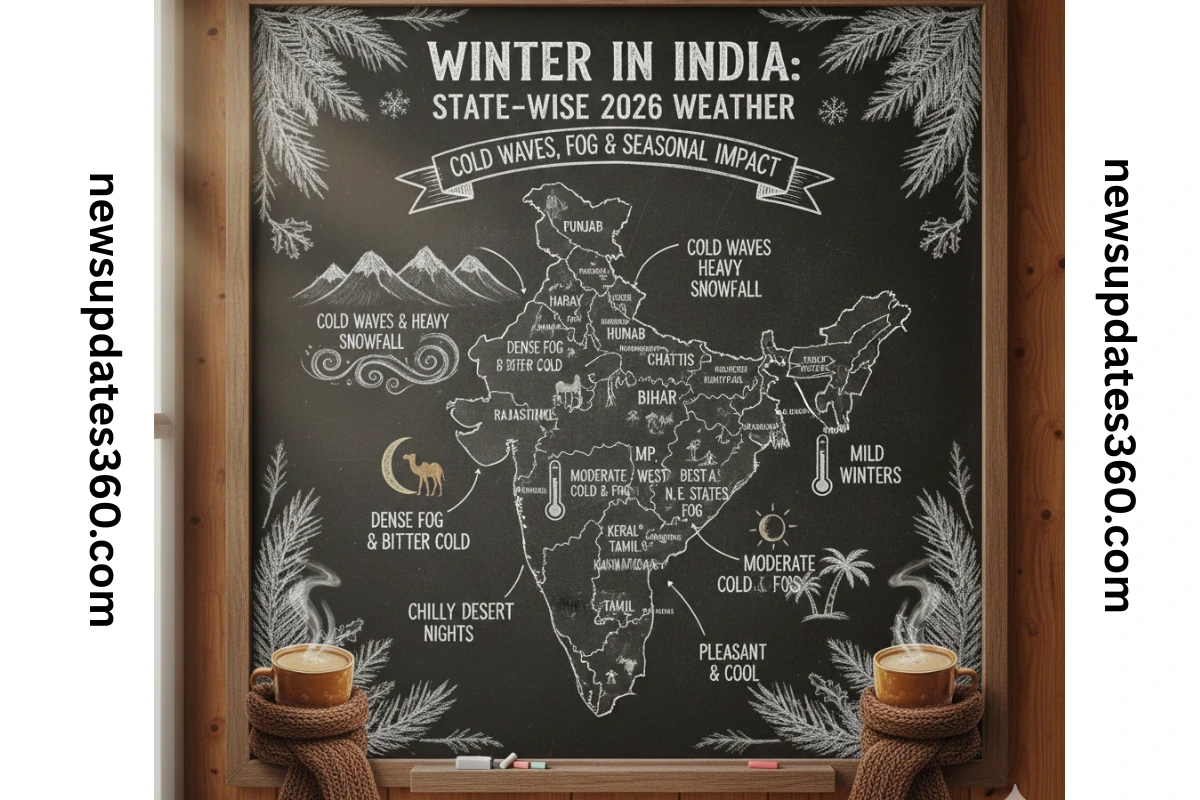
Winter in India state wise analysis across all regions reveals India’s remarkable climatic diversity. While northern states battle cold waves, fog, and snowfall, southern states enjoy mild and pleasant winters. Central, eastern, and north-eastern regions fall between these extremes.
Understanding Winter in India state wise helps citizens, farmers, travellers, and policymakers prepare better. Seasonal awareness reduces health risks, protects agriculture, and ensures smoother daily life.
As winter continues to shape daily routines across India, staying informed remains the key to safety and comfort.
For more updates wikipedia.org
Disclaimer: The information provided in this article on Winter in India state wise is based on general weather trends and public observations. Weather conditions may vary by location and time. Readers are advised to follow official updates from the India Meteorological Department (IMD) and local authorities for accurate and real-time weather alerts.
Related Updates
- Big Relief or Disappointment? LPG Cylinder Price Comparison in India 2025 – घरेलू और वाणिज्यिक गैस कीमतों में ताज़ा बदलाव की पूरी जानकारी
- The Legendary Journey of Maruti Alto: India’s Most Loved Family Car 2000-2025
- Puri Travel Guide 2026: An Amazing Visitor’s Guide to Exploring the Soul of Odisha
- Jaipur – The Pink City of India: 10 Powerful Reasons Its Royal Heritage Still Inspires the World
- Avatar 3 release date on 19 December 2025: A Deep Dive into the Most Anticipated Sci-Fi Film of the Decade Honest Analysis