AI Agents: The Next Big Tech Revolution of 2025-Everything You Need To Know
AI Agents
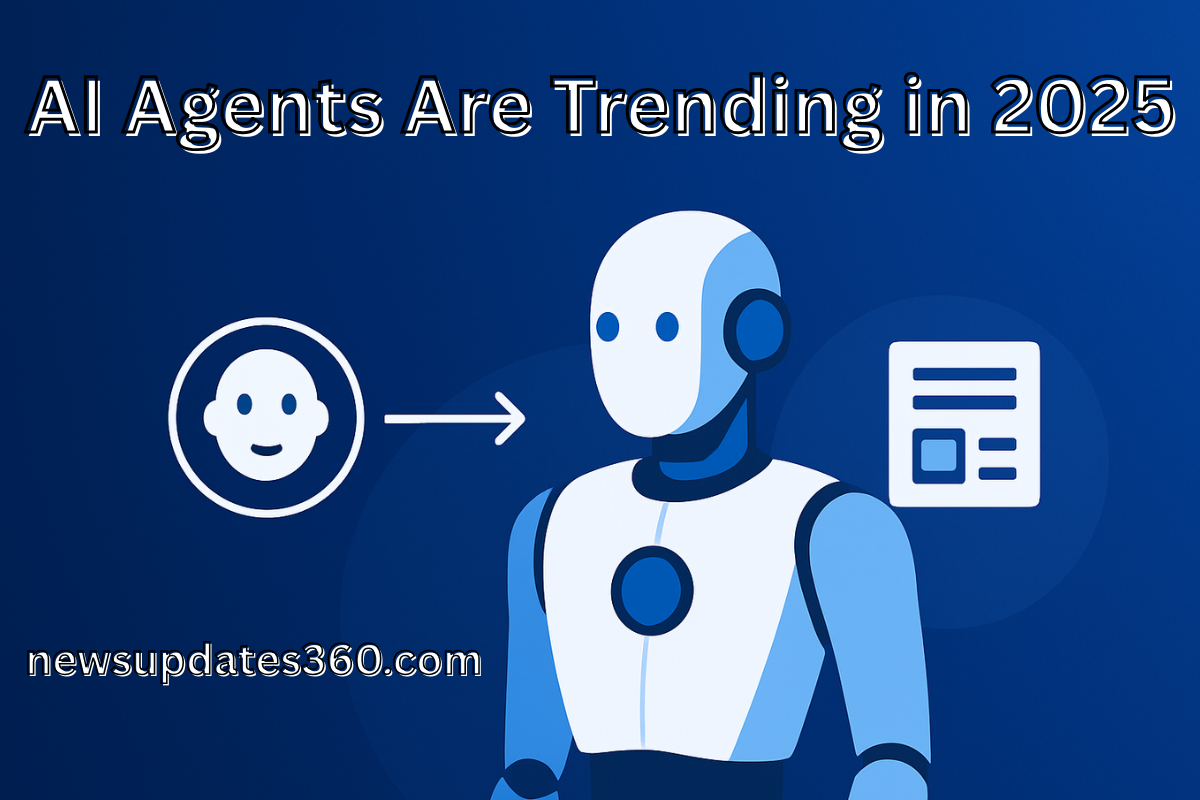
Technology is shifting faster than ever, and in 2025, one trend is leading the race: AI Agents. These are not just chatbots or traditional automation tools they are independent, self-operating AI systems that can think, plan, and execute tasks like a real digital employee.
Whether you’re a developer, tech enthusiast, or working professional, understanding AI Agents is essential because they are redefining how organizations build software, manage workflows, and optimize productivity.
What Are AI Agents?
AI agents are advanced systems that can:
-
Understand goals
-
Break tasks into steps
-
Work through tools (APIs, browsers, databases)
-
Learn from previous outputs
-
Execute tasks autonomously
In simple words:
They don’t wait for prompts every time. Give them a goal, and they’ll figure out the rest.
Examples:
-
An agent that automatically creates a weekly report for your company
-
A coding agent that writes, tests, and deploys code
-
A business agent that manages emails, schedules, and documentation
-
A research agent that studies competitors and provides summaries.
Game-Changing Multimodal Generative AI: Redefining Intelligent Workflows in 2025
Why AI Agents Are Trending in 2025
1. Big Tech Adoption
Companies like Open AI, Google, Meta, Microsoft, and AWS are all building agent frameworks.
This makes agents the hottest area in AI innovation.
2. Increased Automation
Businesses want to cut time and cost.
Agents can perform work humans spend hours on in minutes.
3. Multi-Tool Integration
Agents can now:
-
Search the internet
-
Use cloud services
-
Access CRMs
-
Write emails
-
Analyze documents
-
Execute Python or Java code
This multi-step capability makes them extremely powerful.
4. Personalized AI Workers
People are building their own:
-
Personal AI project manager
-
AI learning coach
-
AI coding partner
-
AI business assistant
2025 is the year of AI-as-a-teammate.
Real-World Use Cases of AI Agents
1. Software Development
Agents can:
-
Write code
-
Generate tests
-
Fix bugs
-
Create API docs
-
Deploy applications
They reduce development time by 50–70%.
Top 10 Global Innovations future technologies 2030 that Will Change the World
2. Data Analytics
Agents can:
-
Clean data
-
Generate dashboards
-
Automate Excel tasks
-
Predict trends
Perfect for finance, marketing, and analytics teams.
3. E-Commerce
AI agents can:
-
Manage product listings
-
Track competitor pricing
-
Handle customer queries
-
Automate order processing
Online stores are already using these to boost sales.
4. Digital Marketing
AI agents can:
-
Create social content
-
Write blog posts
-
Perform keyword research
-
Run ads
-
Analyze campaign performance
Marketing automation has never been easier.
5. Education & Learning
Students and professionals are using agents as:
-
Study planners
-
Doubt-solving assistants
-
Project generators
-
Exam preparation bots
Education is becoming 100% personalized.

Popular AI Agent Tools in 2025
Here are the most trending agent platforms:
-
OpenAI’s Agent Framework
-
Google Gemini Agents
-
LangChain Agents
-
Meta AI Tools
-
Microsoft Autogen Agents
-
Devin AI Developer Agent
-
Vercel AI SDK Agents
Each offers different workflows like coding, research, automation, and enterprise tasks.
Top Cybersecurity Threats of 2025 and How to Stay Safe Online
Future of AI Agents -What’s Coming Next?
In the next 1-2 years, AI agents will move toward:
1. Fully Autonomous Businesses
Small companies may run with only:
-
1-2 humans
-
Multiple AI agents managing operations
2. AI Employees with Roles
Businesses will hire:
-
AI HR Assistant
-
AI Sales Agent
-
AI Developer
-
AI Designer
-
AI Researcher
3. AI-to-AI Communication
Agents will collaborate like human teams and complete full projects.
4. Ethical & Secure AI Governance
Expect new laws for agent safety, privacy, and accountability.
Top 10 Q&A on AI Agents (Trending Topic 2025)
1️⃣ What are AI Agents?
Answer:
AI Agents are autonomous AI systems that can understand goals, plan steps, use tools (APIs, browsers, code), and complete tasks with minimal human input. They are more advanced than chatbots because they can make decisions and execute multi-step workflows.
2️⃣ How are AI Agents different from traditional AI models?
Answer:
Traditional AI models respond only when prompted.
AI Agents can:
-
Take goals instead of prompts
-
Break tasks into steps
-
Use external tools
-
Remember context
-
Work autonomously
They behave like digital employees instead of simple responders.
3️⃣ Why are AI Agents trending in 2025?
Answer:
Because tech giants (OpenAI, Google, Microsoft, Meta) released agent frameworks that allow multi-step automation. Companies now use agents to reduce cost, improve productivity, and automate complex workflows like coding, marketing, and data analysis.
4️⃣ What are the main components of an AI Agent?
Answer:
-
Planner → Breaks goals into small tasks
-
Executor → Performs each step
-
Memory → Stores results & decisions
-
Tools/Skills → APIs, browsers, databases, IDE actions
-
Feedback Loop → Improves next steps automatically
5️⃣ Where are AI Agents used in real life?
Answer:
-
Software development (write + debug + deploy code)
-
Data analytics & report generation
-
Marketing automation
-
Customer support
-
Business workflow automation
-
Research and summarization
6️⃣ What are the benefits of using AI Agents in business?
Answer:
-
Saves time (up to 70%)
-
Reduces operational cost
-
Increases accuracy
-
Automates repetitive work
-
Handles large-scale data tasks
-
Works 24×7 without supervision
7️⃣ What are the challenges of AI Agents?
Answer:
-
Reliability issues in complex tasks
-
Security concerns when given tool access
-
Difficulty in monitoring autonomous actions
-
Requires proper guardrails & permissions
-
Possible ethical risks if misconfigured
8️⃣ What is the difference between AI Agents and RPA (Robotic Process Automation)?
Answer:
| AI Agents | RPA |
|---|---|
| Intelligent, can reason | Rule-based |
| Learns & adapts | No learning |
| Handles unpredictable tasks | Works only on fixed workflows |
| Uses AI models & tools | Uses UI scripts or macros |
AI Agents are more flexible and powerful compared to RPA.
9️⃣ Which frameworks are popular for building AI Agents in 2025?
Answer:
-
OpenAI Agent Framework
-
Microsoft Autogen
-
LangChain Agents
-
Google Gemini Agents
-
Vercel AI SDK Agents
-
Devin AI Developer Agent
🔟 How will AI Agents impact future jobs?
Answer:
AI Agents won’t replace jobs but will replace tasks within jobs.
People who use agents will work faster and smarter. New roles will emerge like:
-
AI Agent Supervisor
-
Agent Workflow Designer
-
AI Quality Auditor
-
Prompt & Agent Engineer
Jobs will shift from “doing work” to “managing AI doing work”.
Final Thoughts: Why You Should Care
AI agents are not just another trend they are becoming the foundation of future digital work.
If you want to stay ahead in tech, now is the best time to learn:
-
How agents work
-
How to use them
-
How to integrate them into your job or business
2025 is the beginning of the AI Agent Era and those who adapt early will benefit the most
For info visit elevenlabs
Disclaimer: The information shared in this blog is for general informational purposes only. I do not guarantee the accuracy, completeness, or reliability of any content provided. Any decisions or actions taken based on this blog are solely at the reader’s own risk, and I am not responsible for any losses, damages, or consequences.
Related Updates
- Top Cybersecurity Threats of 2025 and How to Stay Safe Online
- Top 10 Programming Languages to Master in 2025 for High Salaries (Complete Guide)
- Generative AI in 2025: Revolutionizing Everyday Life Like Never Before
- Top 10 Global Innovations future technologies 2030 that Will Change the World
- Game-Changing Multimodal Generative AI: Redefining Intelligent Workflows in 2025